
Category: Simple Divorce
How to Ensure Your Simple Divorce is Legally Binding in Ontario

Legal Requirements for a Simple Divorce in Ontario
Residency Requirements
To file for divorce in Ontario, certain residency conditions must be met. At least one spouse must have lived in Ontario for a minimum of 12 months before submitting the divorce application. This ensures the provincial courts have jurisdiction over your case.
Grounds for Divorce
Under the Divorce Act (Canada), the sole legal ground for divorce is the breakdown of the marriage. This can be established through one of the following:
- Separation for at Least One Year: Most commonly used, this requires spouses to live apart for at least 12 months.
- Adultery: Requires evidence or admission of infidelity by one spouse.
- Cruelty: Physical or emotional abuse severe enough to make continued cohabitation intolerable.
For a simple divorce, separation is the usual ground, as it does not involve assigning fault to either spouse.
Compliance with the Divorce Act (Canada)
The Divorce Act governs all divorces in Canada, including those filed in Ontario. To ensure your simple divorce is legally binding:
- File the Correct Paperwork: Use Form 8A – Application for Divorce (Simple) and include all necessary supporting documents.
- Serve the Documents Properly: The non-filing spouse must be formally served with the divorce application. This can be done in person or through a process server.
- Address Child and Spousal Support Obligations: If applicable, child support must comply with the Federal Child Support Guidelines, and spousal support should be settled in alignment with the Spousal Support Advisory Guidelines.
Filing the Divorce Application
Step-by-Step Process for Filing a Simple Divorce
- Filling Out Form 8A (Application for Divorce)
-
- The process begins with Form 8A – Application for Divorce (Simple). This form is specifically designed for cases where the applicant is seeking a divorce without claims for property division or spousal support.
- Provide accurate information about yourself, your spouse, your marriage, and the grounds for divorce. Ensure the details match the information on your marriage certificate.
- Providing Proof of Separation or Breakdown of Marriage
-
- For a simple divorce, the most common ground is separation for at least one year. Include the date when you and your spouse began living apart.
- Other grounds, such as adultery or cruelty, require additional documentation or evidence.
- Attach a copy of your marriage certificate to verify the legal validity of your marriage.
- Filing the Application with the Ontario Family Court
-
- Submit the completed Form 8A, along with your marriage certificate and any other required documents, to the Ontario Family Court in the jurisdiction where you or your spouse resides.
- Pay the applicable filing fees, which typically include an initial fee for filing and a second fee when the divorce is finalized.
- Once filed, you will receive a court-issued file number and copies of the application stamped by the court.
- Serving the Application
-
- Serve the filed application to your spouse through a process server or another third party who can ensure proper delivery.
- Submit an Affidavit of Service to the court to confirm that the application has been served.
- Wait for a Response
-
- If your spouse does not contest the divorce, the process moves forward as an uncontested divorce. If contested, you may need to resolve issues before proceeding.
Common Mistakes to Avoid During Filing
- Incomplete Forms
-
- Ensure that all sections of Form 8A are filled out completely and accurately. Missing or incorrect information can delay your case.
- Failure to Include Necessary Documents
-
- Always attach a certified copy of your marriage certificate. If it is in a language other than English or French, provide a certified translation.
- Improper Service
-
- The application must be served by someone other than you (the applicant). Improper service can lead to the court dismissing your application.
- Incorrect Filing Fees
-
- Confirm the current filing fees with the court. Payment errors may result in your application being rejected.
- Delays in Submitting the Affidavit of Service
-
- Failing to promptly file the Affidavit of Service can stall the process.
Ensuring Proper Service of Divorce Papers
Requirements for Serving Divorce Papers to Your Spouse
Under Ontario law, the spouse initiating the divorce (the applicant) cannot personally serve the divorce papers to the other spouse (the respondent). Service must be carried out by a third party who is 18 years of age or older, such as a friend, family member, or professional process server.
Key requirements include:
- Ensuring the divorce application and accompanying documents are delivered accurately.
- Providing proof of service to the court through an Affidavit of Service (Form 6B).
Options for Service
- Personal Service
-
- The most direct method, personal service involves physically handing the documents to your spouse. The server must identify the respondent and confirm that they received the papers.
- This option is ideal for ensuring immediate delivery and acknowledgment.
- Service by Mail or Courier
-
- For less direct delivery, you may choose to serve the papers by mail or courier.
- Include a Form 6 – Acknowledgment of Service, which the respondent must sign and return to confirm receipt.
- While convenient, this method relies on the respondent’s cooperation to acknowledge receipt.
- Alternative Methods of Service
-
- If personal or mail service is not possible, you can request the court’s permission for substituted service (e.g., leaving the documents with another person at the respondent’s residence) or dispense with service altogether if the respondent cannot be located.
- These options require a motion to the court and supporting evidence of efforts to serve the papers.
Filing the Affidavit of Service (Form 6B) with the Court
After the divorce papers have been served, the server must complete an Affidavit of Service (Form 6B), which includes:
- Details of the documents served.
- The date, time, and method of service.
- The name and signature of the person who served the papers.
The completed affidavit must be filed with the court to confirm that the respondent has been properly served. Without this step, the court cannot proceed with your divorce application.
Responding to Potential Issues or Delays
1. Addressing a Spouse’s Objection or Lack of Response
- If Your Spouse Objects to the Divorce
An objection from your spouse can complicate the process, potentially converting the simple divorce into a contested one. In such cases:
-
- Review the Grounds for Objection: Understand the basis of their disagreement, whether it relates to custody, support, or division of property.
- Seek Mediation or Legal Advice: Engage a family mediator or lawyer to negotiate and resolve the disagreement.
- File Additional Documents: If the objection persists, prepare to file documents supporting your claims, such as financial disclosures or custody plans.
- If Your Spouse Fails to Respond
If the respondent does not file an answer within 30 days (or 60 days if served outside Canada), the court may proceed with the divorce as uncontested.
-
- File a Motion for Divorce in Default to request that the divorce application be granted without further input from the respondent.
2. Ensuring All Timelines Are Met to Avoid Delays
Timeliness is critical to avoiding unnecessary delays in the divorce process. Key timelines include:
- Service Deadlines: Ensure the respondent is served promptly after filing the application.
- Respondent Deadlines: Monitor the 30-day response period to act quickly if no reply is received.
- Court Filing Deadlines: Submit the Affidavit of Service (Form 6B) and other required forms within the prescribed time to keep the case on track.
Regularly check the status of your case through the Ontario Family Court to ensure no steps are missed.
3. Handling Disputes During the Process
While simple divorces avoid most contentious issues, disputes can still arise, particularly concerning:
- Child Custody or Support: If disagreements arise, refer to the Federal Child Support Guidelines and work with a mediator or legal counsel to resolve custody arrangements.
- Division of Property or Debts: Even if not part of the simple divorce application, disputes over assets or liabilities can complicate the process. Settling these issues separately or with the assistance of a lawyer can help.
If disputes persist:
- File a motion to the court to seek a resolution.
- Request court-ordered mediation or arbitration if required.
Finalizing the Divorce
1. Obtaining the Divorce Order (Form 25A)
The Divorce Order is the official court document that declares your marriage legally dissolved. To obtain this:
- File a Motion for Divorce: If no objections or disputes exist, submit a motion requesting the court to issue the divorce order.
- Complete Form 25A: Ensure that all information is accurate, including your names, court file number, and the date of the application.
- Review and Submit: Submit Form 25A and any supporting documents to the Ontario Family Court. The court will review your application to confirm that all legal requirements have been met, including service and timelines.
2. Ensuring the Divorce Order is Signed and Sealed by the Court
Once the court grants your divorce:
- The judge will issue the Divorce Order, typically within a few weeks of the final review.
- The Divorce Order must be signed and sealed by the court to be legally valid.
- Ensure you receive a copy of the signed and sealed order. This document confirms that your divorce is official and legally recognized.
3. Applying for the Certificate of Divorce and Its Importance
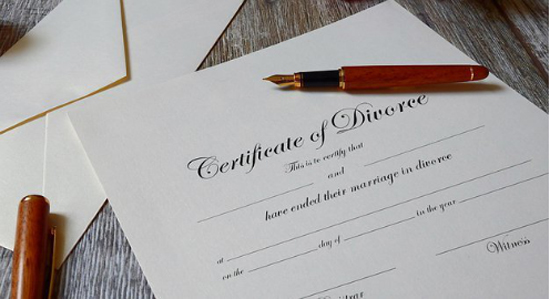
The Certificate of Divorce is a separate document that serves as legal proof of your divorce. It is often required for purposes such as remarriage or settling immigration matters.
- How to Apply
-
- After the Divorce Order is issued, wait for the 31-day appeal period to pass. During this time, neither party can contest the order.
- Once the appeal period expires, submit an application for the Certificate of Divorce to the same Ontario Family Court that issued your order.
- Pay the applicable fee (fees vary by jurisdiction).
- Why It’s Important
-
- While the Divorce Order confirms the legal dissolution of your marriage, the Certificate of Divorce is a concise, official document often required for administrative purposes.
- It is recognized across Canada and internationally as proof of your divorce.
Common Pitfalls to Avoid
1. Failing to Meet Residency or Separation Requirements
- Residency Requirement: At least one spouse must have lived in Ontario for a minimum of 12 consecutive months before filing for divorce. Failure to meet this requirement will result in the court rejecting your application.
Solution: Ensure you or your spouse satisfies this residency rule before initiating the process. - Separation Requirement: For a simple divorce, couples must typically be separated for at least one year. Misunderstanding the separation period or attempting to file prematurely can cause delays.
Solution: Clearly document the date of separation and ensure the one-year period has passed before filing, unless using grounds such as adultery or cruelty, which require additional evidence.
2. Incomplete or Incorrectly Filled Forms
Errors or omissions in the required paperwork can result in processing delays or the rejection of your application. Common issues include:
- Missing signatures or dates.
- Incorrect information about marriage details or the grounds for divorce.
- Forgetting to attach supporting documents, such as a marriage certificate.
Solution:
- Double-check all forms, such as Form 8A (Application for Divorce), for accuracy and completeness.
- Review your application against the checklist provided by the Ontario Family Court.
- Seek legal advice or assistance from a court clerk if you are unsure about any sections.
3. Neglecting to Properly Serve Documents to the Spouse
Proper service of divorce documents is a mandatory step in the process. Neglecting this requirement or failing to provide proof of service can lead to delays. Common errors include:
- Serving the documents yourself (this is not permitted under Ontario law).
- Using an improper service method, such as delivering the documents without proper acknowledgment.
- Failing to file the Affidavit of Service (Form 6B) with the court.
Solution:
- Arrange for a third party (18 years or older) to serve the documents via personal service or service by mail or courier.
- If serving by mail or courier, ensure the Acknowledgment of Service is included and signed by your spouse.
- Promptly file the completed Affidavit of Service with the court to confirm compliance with service rules.
Keeping Your Divorce Legally Binding
1. Importance of Accurate Documentation
Accurate and complete documentation is the foundation of a legally binding divorce. Key aspects include:
- Filing Correct Forms: Ensure all required forms, such as Form 8A (Application for Divorce) and Form 25A (Divorce Order), are properly filled and submitted.
- Supporting Documents: Provide certified copies of your marriage certificate and any other required documentation.
- Record Keeping: Retain copies of all forms, orders, and correspondence with the court for future reference.
Why It Matters: Errors or missing documents can lead to challenges in enforcing the divorce terms or delays in resolving post-divorce matters.
2. Steps to Take If Issues Arise After the Divorce is Finalized
Although a finalized divorce order signifies the legal end of the marriage, issues may still arise. Common post-divorce concerns include non-compliance with the terms or disputes over custody or support.
Steps to Address Issues:
- Seek Legal Enforcement: If your former spouse violates terms such as support payments or custody agreements, file a motion with the court to enforce the order.
- Apply for Modifications: If circumstances change, such as a job loss or relocation, you may need to request a modification to the divorce terms (e.g., child support or custody arrangements).
- Use Mediation: For disputes that don’t require court intervention, mediation can help resolve issues amicably and avoid prolonged legal battles.
Ontario’s Family Responsibility Office (FRO) can assist with enforcing support orders, ensuring payments are collected and distributed appropriately.
3. Ensuring the Terms of the Divorce Are Enforceable
To keep your divorce legally binding, the terms of the divorce order must be clear, fair, and enforceable under Ontario law.
Key Tips for Enforceability:
- Precision in Terms: Ensure that all terms related to support, custody, and property division are clearly outlined. Ambiguity can lead to disputes and enforcement challenges.
- Compliance with Guidelines: Support orders must adhere to the Federal Child Support Guidelines and the Spousal Support Advisory Guidelines to remain enforceable.
- Review and Approve: Have a lawyer review the terms before finalizing the divorce to ensure they meet legal standards and address all potential concerns.
How to Handle Debts in a Simple Divorce in Ontario

Understanding Debt Division in Ontario Divorce Law
Divorce can be an emotionally challenging process, and handling financial matters, especially debts, can add complexity. For those going through a simple divorce in Ontario, it is essential to understand how debts are treated under Ontario divorce law to ensure a fair settlement.
Debt as Part of Family Property in Ontario Divorce Law
In Ontario, debts are considered part of family property and are subject to division just like assets. According to the Family Law Act, any debts incurred during the marriage must be accounted for when dividing the property between spouses.
The key principle here is that debts must be shared fairly between both parties, regardless of who initially incurred them. For example, even if one spouse is primarily responsible for a specific debt, it will still be considered a marital debt that both parties must address in the final settlement. Both spouses should fully disclose all debts during the divorce process to ensure an accurate division.
Equalization of Net Family Property (NFP)
Ontario’s Family Law Act provides a structured method for dividing family property and debts called the equalization of Net Family Property (NFP).
The NFP calculation is straightforward:
- Determine each spouse’s net worth at the time of separation, including both assets and debts.
- Subtract the net worth of each spouse at the time of marriage (to exclude pre-marriage assets and debts).
- The difference, or NFP, for each spouse is calculated.
- The spouse with the higher NFP will pay an equalization payment to the spouse with the lower NFP, ensuring a fair division.
For example, if one spouse’s NFP is significantly higher due to having more assets or fewer debts, they may be required to make an equalization payment to the other spouse.
Key Considerations in a Simple Divorce
Even in a simple divorce, where both parties agree on most terms, handling debts properly is crucial. Both parties must agree on how debts will be divided, or the case could become more complicated and require additional legal intervention. Here are some key considerations when handling debts in a simple divorce:
- Full Debt Disclosure: Both spouses should provide a full and accurate account of all debts, including individual debts, joint debts, and any debts incurred after separation but before the divorce is finalized.
- Joint Debts: If there are joint debts, such as a mortgage or joint credit card, both spouses are legally responsible.
- Debt Payment Plan: In some cases, couples may choose to create a debt payment plan as part of their separation agreement. This plan will outline who is responsible for paying off certain debts, and in some cases, spouses may agree to sell assets to pay off outstanding liabilities.
- Legal Advice: Even in a simple divorce, seeking legal advice from a qualified Toronto divorce lawyer is essential to ensure that both parties’ rights are protected when dividing debts and assets. A lawyer can help create a legally binding separation agreement that outlines how debts will be handled.
Common Types of Debts Addressed in Divorce
Joint Debts in Divorce
One of the most common debt-related issues in divorce involves joint debts, such as shared credit cards, car loans, or personal loans. Joint debts are those where both spouses are legally responsible, even if one person primarily used the credit or benefited from the loan.
During a divorce, joint debts are typically split equally between both spouses or according to the terms of the divorce settlement. It is essential to clarify who will continue to make payments on joint debts to prevent negative impacts on both spouses’ credit ratings.
In many cases, spouses may agree to pay off joint debts before finalizing the divorce or divide responsibility for the remaining balance. However, even if one spouse agrees to take over a joint debt, both parties remain legally responsible unless the debt is refinanced or the creditor releases one spouse from the obligation.
Individual Debts
Individual debts are debts incurred by one spouse, either before or during the marriage, in their name alone. These may include personal credit cards, student loans, or personal lines of credit. However, just because a debt is in one person’s name doesn’t always mean the other spouse is not affected.
Under Ontario law, individual debts incurred during the marriage are typically included in the equalization of Net Family Property (NFP). This means that even if one spouse took out a loan or ran up a credit card balance, the debt may be considered part of the family’s overall liabilities and can impact the division of property.
That said, individual debts incurred before the marriage are usually the responsibility of the spouse who incurred them, and they do not typically affect the other spouse during the divorce.
Mortgage or Home-Related Debts
Mortgage debts or home equity lines of credit (HELOCs) are another significant consideration during divorce. When dividing property, the Family Law Act in Ontario treats the matrimonial home differently from other assets. If both spouses are listed on the mortgage, both are equally responsible for the debt.
In most cases, the home may be sold, and the proceeds used to pay off the mortgage. The remaining equity (if any) is divided between the spouses. If one spouse wishes to keep the home, they may buy out the other spouse’s share of the equity, but they will typically need to refinance the mortgage to remove the other spouse from the loan agreement.
A Toronto divorce lawyer can help ensure the proper handling of mortgage-related debts, including working out whether one spouse will retain the home or if it will be sold to settle the debt.
The Role of a Toronto Divorce Lawyer
When it comes to dividing debts in divorce, things can get complicated quickly. That’s where a Toronto divorce lawyer plays a critical role. Here are a few ways a lawyer can assist with debt-related issues:
- Clarifying debt division: A lawyer will help you understand which debts are joint or individual and ensure that they are fairly addressed during the divorce process.
- Negotiating debt settlements: Your lawyer can negotiate with your spouse or their legal representation to ensure a fair distribution of debts and protect your financial interests.
- Protecting your credit: A lawyer can provide guidance on how to handle joint debts, such as credit cards or loans, to prevent harm to your credit score during the divorce.
- Handling complex assets: If mortgage debts or other high-value assets are involved, a lawyer can assist in ensuring that these debts are divided equitably and in accordance with Ontario law.
Options for Dividing Debts in a Simple Divorce
A Toronto divorce lawyer can help guide you through various options to ensure a fair division. Below are several common approaches to dividing debts in a simple divorce.
Splitting Debts Equally
One of the most straightforward ways to handle debts during a simple divorce is for both parties to agree to split the debts equally. This method can help simplify the divorce process, especially if the debts are relatively equal or manageable. By dividing the total debt in half, each spouse is responsible for an equal share, regardless of who incurred the debt during the marriage.
For example, if a couple has $10,000 in joint credit card debt, they might agree that each spouse will pay off $5,000. This approach works well when both spouses have similar financial situations or when they want to avoid prolonged negotiations over who owes what.
However, it’s essential to ensure that any joint debts, such as credit cards or loans, are handled carefully. Even if you and your spouse agree to split the debt, both names may still be on the loan or credit account, meaning both spouses could remain legally responsible for payments. It’s advisable to close joint accounts or refinance them to avoid future complications.
Assigning Specific Debts to Each Spouse
In some cases, spouses may prefer to assign specific debts to each other, rather than splitting them evenly. This method can work well when one spouse agrees to take on a particular debt in exchange for receiving other assets or financial considerations.
For instance, if one spouse takes on the responsibility of paying off a car loan, the other spouse may agree to receive a larger portion of a shared savings account or another asset in return. This approach allows for a more flexible and customized division of debts, depending on each spouse’s financial situation and preferences.
It’s crucial to note that, even if one spouse agrees to take on a debt, the creditor may still hold both parties responsible if the debt was incurred jointly. Refinancing the debt or reaching a legal agreement that releases one spouse from future responsibility may be necessary.
Refinancing Joint Debts
Another option for couples going through a simple divorce is to refinance joint debts. This approach can be especially helpful when dealing with larger debts, such as mortgages, car loans, or personal loans. Refinancing allows one spouse to take over the debt entirely by putting the loan or mortgage solely in their name.
For example, if both spouses are listed on a mortgage, and one spouse wants to keep the home, they can refinance the mortgage in their name alone, assuming they qualify. This removes the other spouse from the mortgage and eliminates their future financial responsibility for the home.
Refinancing joint debts can be a valuable way to avoid lingering liabilities after the divorce. However, it’s essential to work with a financial institution and a qualified Toronto divorce lawyer to ensure that the refinancing process is handled correctly and that both parties are protected.
Debt Division Agreement
One of the most critical aspects of dividing debts during a divorce is creating a debt division agreement. This agreement is typically included in the broader separation agreement and clearly outlines how debts will be divided between the spouses.
A debt division agreement is essential because it:
- Documents the agreed-upon division of debts, ensuring both parties are aware of their responsibilities.
- Protects both spouses legally, preventing future disputes or claims that one party failed to fulfill their obligations.
- Helps enforce the debt division, particularly if one spouse fails to make payments as agreed. In this case, the agreement can be used in court to hold the other party accountable.
Protecting Yourself from Future Liability
Closing Joint Accounts
One of the most effective ways to protect yourself from future liability is by closing all joint accounts as soon as possible after deciding to divorce. Joint accounts, whether they are credit cards, lines of credit, or bank accounts, can continue to accumulate debt, even after you’ve separated. If your spouse racks up additional debt on a joint account, creditors can pursue either spouse for repayment, regardless of what’s been agreed upon in your divorce settlement.
By closing joint accounts, you minimize the risk of your spouse incurring new debt in your name, and it allows you to take control of your financial future. Be sure to notify your spouse of your intention to close the account and ensure that any outstanding balances are dealt with appropriately—whether by paying off the debt or transferring it to an individual account.
Notifying Creditors
It’s crucial to notify creditors about your separation and provide them with clear information about how any joint debts will be handled. While the division of debts can be addressed in your separation agreement, creditors are not bound by these agreements. From the creditor’s perspective, both spouses are still responsible for repaying any debts incurred during the marriage.
By notifying creditors of the separation, you can ensure that they are aware of the situation and request that they limit any new charges or credit extensions on joint accounts. Additionally, some creditors may be willing to work with you to transfer debt obligations into one spouse’s name, provided that the spouse has the financial ability to take on the debt independently.
Indemnity Clauses in Separation Agreements
An important legal safeguard in divorce is the inclusion of an indemnity clause in the separation agreement. Indemnity clauses are designed to protect one spouse from being held financially responsible for the other spouse’s debts after divorce.
Here’s how indemnity clauses work:
- If one spouse agrees to take on responsibility for a particular debt (such as a credit card or loan), the indemnity clause states that they will indemnify (compensate) the other spouse if they are pursued for repayment by the creditor.
- This clause offers a level of protection if the responsible spouse fails to make payments or defaults on the debt, preventing the other spouse from being financially liable.
While an indemnity clause cannot stop creditors from pursuing joint debt holders, it provides legal recourse for the non-responsible spouse to recover any funds they had to pay due to the other spouse’s failure to meet their obligations.
Including indemnity clauses in your separation agreement is an essential step in ensuring your financial protection. A Toronto divorce lawyer can help you draft these clauses correctly to offer the best protection against future liability.
Legal Support from a Toronto Divorce Lawyer
The process of dividing debts and ensuring that both parties are adequately protected requires expert legal guidance. A Toronto divorce lawyer can play a crucial role in helping you navigate these issues by:
- Reviewing your separation agreement: A lawyer will ensure that the division of debts is clear and enforceable, and that necessary protections like indemnity clauses are included.
- Negotiating with creditors: Your lawyer can communicate with creditors on your behalf to negotiate the transfer of joint debts or the closure of accounts.
- Protecting your financial interests: By having a lawyer oversee the division of assets and debts, you reduce the risk of future financial liability and ensure that your rights are upheld throughout the divorce process.
Tips for Avoiding Debt-Related Disputes
Below are practical tips on how to handle debts during a divorce, including the importance of transparency, seeking professional financial advice, and involving a Toronto divorce lawyer early on.
Transparency About Debts
The foundation of a fair and conflict-free debt division process is transparency. Both spouses must be open and honest about their debts from the beginning of the divorce process. This includes all types of debt, such as joint debts (credit cards, mortgages) and individual debts (student loans, personal credit lines).
When both parties fully disclose their financial obligations, it helps prevent future disputes. A lack of transparency can lead to mistrust and complications down the road if hidden debts are uncovered after the divorce is finalized. Full financial disclosure is also essential for calculating Net Family Property (NFP) and ensuring a fair equalization of assets and debts.
To ensure transparency:
- Provide documentation: Share detailed statements from all accounts, loans, and credit cards.
- Disclose all liabilities: Include debts incurred during the marriage and any post-separation liabilities.
- Discuss future liabilities: Anticipate debts that may continue after separation, such as joint credit cards or mortgages.
Get Professional Financial Advice
Dividing debts during a divorce can be complicated, particularly if there are significant assets or liabilities involved. To make informed decisions about debt division, it is often wise to consult with a financial advisor or debt counselor. These professionals can offer personalized guidance on how to best handle the division of debts based on your specific financial situation.
A financial advisor can help you:
- Evaluate your financial standing: Understand the full scope of your assets, debts, and liabilities to make informed decisions.
- Develop a debt repayment plan: Create a strategy to pay off or divide joint debts effectively.
- Assess future financial impact: Get advice on how debt division will affect your long-term financial health, including credit scores and future borrowing potential.
Involve a Divorce Lawyer Early On
Perhaps the most critical step in avoiding debt-related disputes is to involve a Toronto divorce lawyer early on. Divorce lawyers are skilled in handling the legal complexities of debt division and can ensure that your rights are protected throughout the process.
Here’s how a Toronto divorce lawyer can assist with debt-related issues:
- Legal guidance on debt division: Your lawyer will help ensure that debts are divided in accordance with Ontario’s Family Law Act, whether through equalization or negotiation.
- Drafting debt agreements: A divorce lawyer can draft a clear separation agreement that outlines how debts will be managed and which spouse is responsible for paying off specific liabilities.
- Mitigating disputes: By involving a lawyer early, you can resolve potential disputes before they escalate, ensuring a smoother divorce process.
- Protecting your financial interests: A lawyer can help you avoid taking on more debt than you should be responsible for and protect you from hidden liabilities that could arise later.
When to Consider Mediation or Legal Advice
When Debts Are Complicated or Disputed
Not all debt division is simple. When debts are complicated or disputed, professional intervention can be vital to finding a fair solution. Some common scenarios that may require mediation or legal advice include:
- Significant joint debts: Couples with large mortgages, multiple joint credit lines, or shared business loans may struggle to divide these liabilities fairly without expert assistance.
- Debts incurred after separation: In some cases, one spouse may continue to accumulate debts after the separation, leading to disputes over who is responsible for paying off these liabilities.
- Disputed responsibility: When one spouse claims that certain debts should not be divided equally—such as debts incurred through gambling or other risky financial behavior—disagreements can arise. Mediation can help resolve these disputes in a non-confrontational way.
- Hidden debts or liabilities: If one spouse discovers hidden debts or financial obligations during the divorce process, it can lead to serious disputes. A mediator or Toronto divorce lawyer can assist in negotiating a resolution that protects both parties.
Consulting a Toronto Divorce Lawyer for Advice
If you are unsure about the division of debts or have concerns about future liabilities, it’s essential to consult a Toronto divorce lawyer. Legal professionals can provide the expertise you need to navigate debt-related issues during a divorce and ensure that your rights are fully protected.
Here are some key reasons to seek legal advice during the debt division process:
- Clarifying legal obligations: A lawyer can help you understand your legal rights and obligations under Ontario’s Family Law Act, particularly concerning joint and individual debts.
- Ensuring fair division: Your lawyer will work to ensure that debts are divided fairly, taking into account the financial circumstances of both spouses. This can prevent one party from being unfairly burdened with more debt than they should be responsible for.
- Protecting against future liabilities: A divorce lawyer can help you draft a separation agreement that includes clear provisions about debt division, indemnity clauses, and refinancing terms. This protects you from future liabilities if your ex-spouse defaults on a debt.
- Handling complex financial situations: For couples with significant assets, business interests, or complicated financial portfolios, legal advice is crucial for ensuring that all debts and liabilities are addressed appropriately.
Seeking advice from a Toronto divorce lawyer early in the process can prevent costly mistakes and ensure that your financial future is secure.
What is a Simple Divorce in Ontario?
A simple divorce in Ontario is a streamlined legal process designed for couples who mutually agree to end their marriage without disputes over major issues like child custody, property division, or spousal support.
Understanding a Simple Divorce
Definition of a Simple Divorce
A simple divorce refers to a straightforward legal procedure used when both spouses agree to the divorce and there are no unresolved issues to litigate, such as child custody, child or spousal support, or property division. Essentially, it’s a type of “uncontested divorce,” meaning the couple does not require the court to make decisions on their behalf, simplifying the process significantly.
Criteria for a Simple Divorce in Ontario
For couples to qualify for a simple divorce in Ontario, they must meet specific criteria. These include:
- Mutual Agreement: Both parties agree that the marriage has irreparably broken down.
- Separation Period: The couple must have been separated for at least one year before filing. While they can file for divorce before the one-year mark, the court will only grant the divorce after this period.
- Minimal Conflict: The couple should not have disputes regarding critical issues like child custody, property division, or support payments.
- Residency Requirements: At least one spouse must have lived in Ontario for at least one year before filing the application.
Additionally, one or both spouses can file for a simple divorce either individually or jointly, depending on their situation.
Difference between Simple and Contested Divorce
A key distinction between a simple and a contested divorce lies in the level of agreement and conflict. A contested divorce occurs when spouses disagree on one or more major issues, such as property division, child custody, or financial support. This type of divorce often leads to a lengthier and more expensive legal battle, as court intervention is required to settle disputes.
Benefits of a Simple Divorce in Ontario
Let’s explore the key benefits:
1. Lower Costs
One of the most significant benefits of a simple divorce is the lower cost. Since both parties agree on the terms of the separation and there are no contested issues, such as property division or child custody, there is no need for lengthy court battles. This results in:
- Reduced Legal Fees: Fewer disputes mean less time spent with a divorce lawyer, significantly cutting down legal expenses.
- Minimized Court Costs: With no need for court appearances to resolve disagreements, the overall process becomes more affordable.
2. Faster Resolution
A simple divorce typically leads to a much faster resolution compared to more complex divorce cases. When both parties agree on the terms and there are no contested issues, the legal proceedings are straightforward, resulting in:
- Quicker Processing Times: Since the court does not need to intervene in disputes, the application process moves faster through the system.
- No Delays for Disagreements: Without contentious matters to litigate, the couple can finalize their divorce without long waits for hearings or court decisions.
3. Less Emotional Strain
Divorce can be emotionally challenging, but a simple divorce helps reduce the emotional strain. With fewer legal hurdles and a faster process, both parties can avoid the prolonged stress that often accompanies a contested divorce. Key emotional benefits include:
- Reduced Conflict: A simple divorce relies on mutual agreement, meaning the couple can part ways with minimal tension and animosity.
- Avoidance of Lengthy Court Battles: Courtroom disputes can be emotionally draining. By opting for a simple divorce, couples avoid the drawn-out litigation process, making the transition smoother.
4. The Role of a Divorce Lawyer in Ensuring Smooth Proceedings
Even though a simple divorce is straightforward, the guidance of an experienced Toronto divorce lawyer is invaluable in ensuring the process goes smoothly. A divorce lawyer can help in several ways:
- Streamlining the Paperwork: Filing for a simple divorce involves completing various forms and ensuring that all documentation is in order. A divorce lawyer can assist in preparing and submitting the necessary paperwork, preventing costly mistakes.
- Ensuring Legal Compliance: A divorce lawyer ensures that both parties meet the legal requirements for a simple divorce, such as the separation period and residency conditions.
- Advising on Legal Formalities: A lawyer can provide legal advice throughout the process, ensuring that both parties understand their rights and obligations.
Common Mistakes to Avoid in a Simple Divorce
Below are some of the most frequent mistakes couples make when filing for a simple divorce and how working with a divorce lawyer in Toronto can help prevent them.
1. Failure to Complete Paperwork Properly
One of the most common mistakes in a simple divorce is failing to complete the required paperwork accurately. Divorce applications require detailed information, and even small errors can lead to delays or rejected filings. Common issues include:
- Missing Signatures or Information: Leaving sections incomplete or failing to provide necessary documentation.
- Filing in the Wrong Court: It’s crucial to ensure that the application is filed in the appropriate court jurisdiction.
To avoid these errors, it’s essential to double-check all forms and documents for accuracy. A divorce lawyer in Toronto can streamline this process by ensuring everything is completed correctly from the outset, avoiding costly delays.
2. Not Addressing Outstanding Financial Matters
Even in a simple divorce, it’s critical not to overlook outstanding financial matters. Many couples make the mistake of focusing solely on dissolving their marriage without addressing debts, minor property disputes, or shared accounts. Ignoring these issues can result in complications later, including:
- Unresolved Debts: If joint debts are not addressed, both parties may still be responsible, even after the divorce is finalized.
- Overlooked Assets: Failing to divide or close joint accounts or minor property can lead to legal disputes after the divorce.
3. Ignoring Future Issues like Spousal Support
Another mistake couples often make is ignoring potential future issues, such as spousal support. Even in cases where support is not immediately needed, circumstances can change. For example, one spouse may experience financial difficulties later, and if the possibility of spousal support is not addressed during the divorce, it could lead to complications down the road.
- Future Claims: Spousal support claims can arise long after the divorce if they are not properly addressed, especially if one spouse’s financial situation changes.
- Modifications: If support agreements are not set up initially, modifying them later can be more challenging.
When a Simple Divorce Might Not Be Suitable
Complexity of Shared Assets or Children Involved
A simple divorce is designed to handle cases where there are no contested issues, such as child custody, property division, or spousal support. However, if you and your spouse have shared assets or children, the divorce process can become much more complicated. Reasons a simple divorce might not work in these situations include:
- Property Division: If you and your spouse own a home, investments, or other significant assets, determining who gets what can lead to disagreements. A simple divorce does not address the legal complexities of asset division, which might require a more involved legal process.
- Child Custody and Support: When children are involved, it’s crucial to establish custody arrangements and child support obligations. These are not typically addressed in a simple divorce, making it unsuitable for couples with parenting concerns.
When to Consider Mediation or a Contested Divorce Instead
If your divorce involves complex financial matters or disagreements over child custody, mediation or a contested divorce may be a more appropriate option. Here’s why:
- Mediation: In cases where couples can’t agree on certain issues but want to avoid a lengthy court battle, mediation provides a collaborative way to resolve disputes. A trained mediator helps both parties reach a mutually beneficial agreement on issues like asset division and child custody.
- Contested Divorce: If mediation is not successful and disputes remain unresolved, a contested divorce may be necessary. This involves the court stepping in to make decisions on behalf of both parties regarding finances, assets, and children.
Consulting a Divorce Lawyer to Evaluate Your Case
Before deciding if a simple divorce is the best option for your situation, it’s essential to consult with a divorce lawyer in Toronto. An experienced lawyer can help evaluate your case and provide expert advice on the most suitable legal path based on your circumstances. Here’s how a lawyer can assist:
- Case Evaluation: A lawyer can assess whether your divorce qualifies as a simple one or if additional steps, such as mediation or a contested divorce, are necessary.
- Tailored Legal Advice: Every divorce is unique, and a lawyer can offer guidance tailored to your specific situation, ensuring that all legal aspects are properly addressed.
- Navigating Legal Complexities: Even in a simple divorce, legal complexities can arise, especially when shared assets or children are involved. A divorce lawyer can help you navigate these challenges and protect your rights throughout the process.
Staring Your Online Divorce

Deciding to separate or divorce is one tough step to make, keeping in mind the many questions of how the process will start and end. However, amidst such questions, there are many options that couples may use to part ways amicably. One way is to use online divorce.
Online divorce is the best if time and situation don’t allow you. You can do it at the comfort of your home and get your divorce decree.
The only hitch back is when both parties seem not to agree on matters related to the divorce. In such a case, then it’s better to seek legal help and understand the best way to end marriage relationship.
Starting Your Online Divorce
Even if you think that online divorce is easy, it would be good to first speak with a divorce lawyer who will help you understand your rights and responsibilities as they apply to our situation.
If you and your spouse have agreed on almost all matters about your divorce, then divorce online is the way to go. Nevertheless, you will also need to consider the quality of your divorce, which may be affected by the price, knowledge about what to do online, and other issues such as your spouse’s involvement.
The process becomes easy when Toronto’s top divorce lawyer guides you. However stress-free such a process may seem to be, you don’t want to make mistakes that may cost you later.
Filing divorce online will depend on the specifications required in your state. But normally, the process is simple with:
- Ready to file divorce documents which you can easily complete with your spouse at your own pace. Also,
- You can review and makes changes where necessary.
Filing Your Online Divorce
Filing an online divorce will be right for you if you are contemplating on:
- Simple divorce: In Ontario, you have the chance to file a simple divorce online and avoid going to court. Or, you can file your own divorce if you don’t have any court orders.
- Joint divorce: Instead of doing a separate divorce, you and your partner may choose to do it together to save time. But, you should agree on all matters concerning child support, alimony, division of assets and debts, etc.
When you file your simple divorce, you may be notified within five business days on whether such documents are accepted or not.
Talk To A Lawyer Before Filing Your Online Divorce
Just because it’s online doesn’t mean you will not meet with a judge. Thus, you may choose to seek legal advice before taking any step to filing your divorce.
Before you file your divorce, you need to ensure you have adhered to the family law rules and have the relevant documents from the Ontario and Superior court of justice.
In comes situations, you may be required to affirm an oath with the help of a public notary to ensure you have the true copies.
If you have any questions concerning filing a divorce online, you may seek help from an experienced divorce lawyer.
Can I File A Simple Divorce Based On Adultery?

One way to show that your marriage has broken down in Canada is if your spouse has committed adultery. While spouses try to reconcile their differences to avoid a breakup, adultery in marriage is one factor that may not work out. Any marriage breakdown is proven by:
- The fact that one spouse engaged in adultery
- One spouse has physical, mental cruelty, and
- Both spouses have lived apart for a year
According to the Divorce Act, where any of the above criteria is proven, one can comfortably divorce their spouse. The fastest and easiest way to this process is by filling for a simple divorce in Ontario. One main question for any spouse filing for such divorce is whether there could be any legal implication to file for divorce in Ontario based on adultery.
Do I Need To Prove Adultery When Filling For Simple Divorce?
It’s rare for the court to ask one to prove adultery during divorce in Canada, but in some unique cases, where adultery may prove to affect the court decision, such may be required. For any divorce settlement, the court has to prove that adultery took place. When filing for divorce in such manner, you may consider the below points:
- One act of adultery is enough to show a marriage breakdown
- Suspicion of adultery cannot stand as a proof
Who will prove adultery?
- The accused spouse can admit that they committed adultery or,
- The third party with whom they had an affair can also testify.
The court does not need to have evidence that you caught your spouse in the act with someone else. You only need to show that your ex-spouse has an opportunity that they used to commit adultery. However, the court becomes more satisfied with your evidence when you can pinpoint the place and time of adultery.
Will Adultery Affect Child Custody, Support, Or Alimony?
Though you may have to use adultery as a factor of marriage breakdown, this doesn’t mean that you will have a smooth divorce settlement. However, suppose such an affair affected your marital assets, children. In that case, the judge may use such when coming up with a decision on child custody and factor the same when dividing assets.
Generally, adultery has no impact on how the court rules out the outcome of your divorce case. Meaning it doesn’t mean that your cheating spouse will receive fewer assets or will not be allowed child custody. However, if infidelity seems to have an adverse effect on your children, child custody may be a factor considered by the judge. Again, if the spouse who committed adultery chooses to remarry and live with the children and the children seem to be exposed to a certain kind of trauma, then this may be considered to be against child best interest.
Hire A Lawyer
When making decisions about divorce, both spouses should collaborate and decide on all major factors affecting their children. Coming up with a separation agreement helps you determine what can work well during and after divorce. It makes it less cheap, as it may prevent you from going to court. Before applying for your divorce, it’s always advisable to have legal advice from a divorce lawyer, because provinces and territories have different rules.
Obtaining A Temporary Order Before The Final Divorce Decree
Once the process of divorce starts, it may take time before everything is finalized. Some issues may not wait until the process is over. For instance, if one spouse needs support for the children, this cannot be stopped until the divorce is finalized. Therefore, a temporary order to address urgent issues that can’t wait has to be prepared. If you plan to divorce in Ontario, you need to get a temporary order to address urgent issues before the final divorce decree is given.
Asking For A Temporary Order
Once a divorce is filed, issues may crop up, and the final divorce may take several months or years before the process winds up. This is common, especially to the contested divorces. But if both divorcing couples agree, they can come up with a temporary agreement without involving the court. If your divorcing partner has moved out of the house, and it seems your expenses will overwhelm you soon, the best thing you can do is to request the court for a temporary order. A judge may issue interim orders dictating how things should be dealt with before the final divorce decree. For any temporary order to be granted, the court must be satisfied with:
- What is being requested, and
- Reasons why a temporary order is being requested. For instance, if you are the spouse staying with children, you may need to move faster to decide on child custody and support or health insurance expenses.
Requirements For A Temporary Order
To ask the judge for a temporary order, you may need to show:
- What you are asking for. You may be required to file a form detailing the request you are making.
- You need a supporting declaration showing that you need financial support as a spouse or for the children.
- Proof of service showing that you have served your spouse with the request form
- If the request is granted, you will be granted a proposed temporary order.
Once you are done with the above, you will be required to attend a court hearing scheduled within days or weeks after the request is made. The judge will review any income statements and other relevant details of your request. You will probably be required to answer some questions or even have witnesses give testimony. Once the judge is convinced that the request for temporary order satisfies the need at hand, your request will be granted. The judge may be reluctant to grant the request if the issues at hand are not time-sensitive. The order is then granted as per the request, or the judge may make some modifications.
How Long Will The Temporary Order Be Effective
Once a temporary order is issued, it stays in effect until another hearing is requested or the divorce is finalized. The request given through temporary orders is not permanent. They are only to keep things moving until the final court decisions’ are made. If you are not sure how to come up with a temporary order, you can request your Toronto divorce lawyer for legal guidance.
7 Reasons To Appoint A Divorce Lawyer
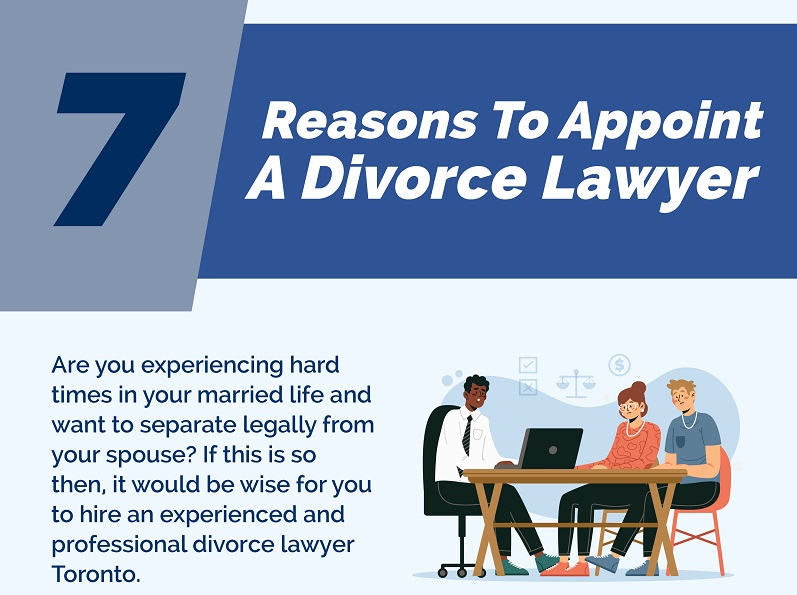
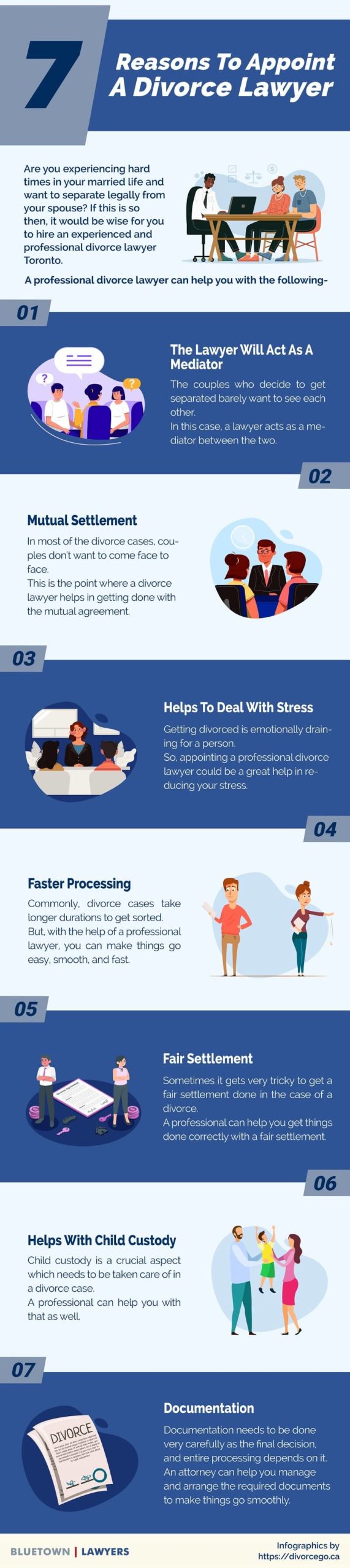
Going through a divorce isn’t an easy process without the help of a divorce lawyer in Toronto. They are able to provide their clients, not just legal help, but a piece of good advice too. To get the best legal help, always look for a professional divorce lawyer. There are various benefits of hiring lawyers, such as knowledge of surrounding divorce lawyers, and knowledge of local judges and firms.
Couples who decide to get a divorce rarely want to see each other. But with the help of a divorce lawyer, couples are able to come to an agreed settlement much faster. A lawyer can redirect negative emotions by taking on the role of a mediator. By hiring a trustworthy divorce lawyer, you are able to lessen your load and less part of your burden. Your divorce lawyer will be there to help take care of the details, keep you focused and hold your hand throughout the process.
Share this Infographic On Your Site
Infographic: 8 Common Myths Surrounding Divorce In Canada
Do you want to legally separate from your spouse? You can move on if the differences are irreconcilable. However, there are some common myths related to divorce in Ontario. Many feel that if both spouses are employed, then there can be no spousal support. Spousal support can be ordered based on factors like difference in income. There is no guarantee that one can get access to a child by paying child support. Many believe that if a spouse has committed adultery, the court will rule in favour of the other person. Each state has its laws and so, you should consult a Toronto divorce lawyer.
You can file for divorce based on evidence after fulfilling the legal process. There is no assurance that you can keep a house because you bought it before marriage. Your spouse can get a part of the property if there is evidence. You don’t need to live in a house continuously so that you don’t lose your stake in it. Unlike what many believe, legal laws can be initiated for people who are in a common-law relationship for spousal support. Staying separately for one year doesn’t guarantee the end of a marriage. A marriage can end only after a court order is issued.

Share this Infographic On Your Site
Infographic: 3 Smart Tips To Select A Divorce Good Lawyer

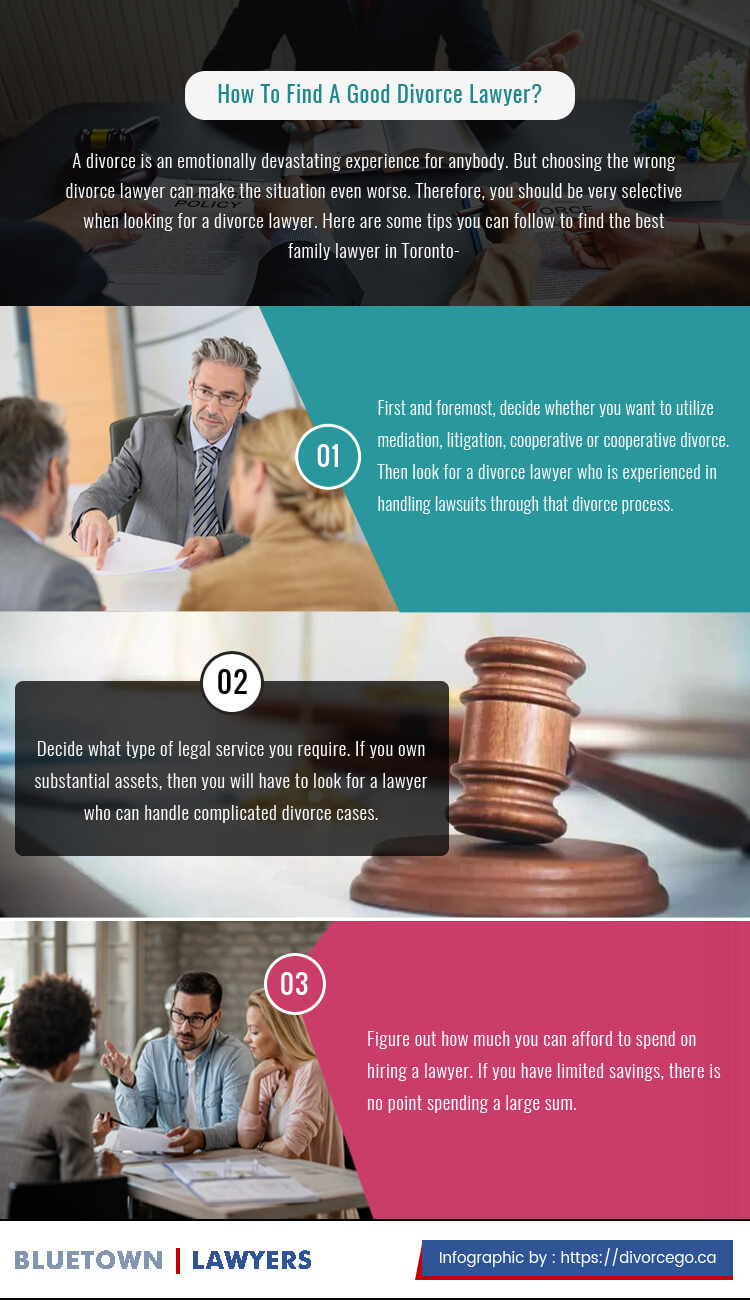
Do you need legal assistance to divorce your wife? To ensure that the lawsuit ends in your favour, you will have to make sure that you choose a divorce lawyer wisely. First, you have to decide whether you want to utilize mediation, litigation, cooperative, or cooperative divorce. By doing so, you can hire a lawyer who is experienced in handling similar lawsuits.
Next, decide what type of legal service you require for your situation. If you own substantial assets, then you will have to look for a lawyer who can handle the complicated divorce cases. Similarly, figure out how much you can afford to spend on hiring a divorce lawyer Toronto. In case if you have limited saving, there is no point in spending a large sum.
Share this Infographic On Your Site
Filing a Joint Divorce In Ontario

There are instances when a married couple mutually agrees that it is for the benefit of their relationship that they divorce. The agreement to divorce is in the best interests of the married couple and their relationship. It is possible for the couple to file for what is referred to as a joint divorce.
A joint divorce is a divorce option that is friendly and amicable. It takes the friendly factor one step further as there is no one party who files for divorce against the other. Rather, in a joint divorce all the documents are completed and executed by both parties. Parties to the divorce agree also on all other family law matters such as parenting, spousal support or division of property. A joint divorce is beneficial as both parties really feel that they are ending their relationship on the best possible terms. There is no focus on winning a divorce but rather just moving to the next chapter of a person’s life with minimal conflict.
In order for a couple to use the joint divorce process they must fall into the following criteria:
- One of the parties must be a resident of Ontario for one year prior to filing the joint statement of claim for divorce
- The basis or grounds for divorce can only be that the parties have been living separately and apart for one year prior to the divorce judgement being executed. It is important to note that if cruelty or infidelity is the grounds for divorce then this process cannot be used; rather they must use the uncontested divorce route.
With regards to the second criteria it is necessary to understand what constitutes separation for the purposes of divorce. As it is possible for you and your spouse to live in the same house and yet be considered to be living separate and apart for the purposes of the Divorce Act.
In order to complete the joint divorce application Ontario process for you, your Toronto divorce lawyer will need the following documentation from you:
- An original copy of your government-issued marriage certificate. If your marriage was out of the country and you do not have the marriage certificate you will need the marriage details and witness details for your wedding.
- If parenting is involved:
-your agreement on a parenting plan
-both parties’ income summary and agreement on child support, including the agreement on how to pay for additional expenses of the child (such expenses can include activities, education costs, medical or dental, and childcare) - If spousal support is involved then a breakdown of the agreement that you have reached on spousal support
It must be noted that on average it takes between 2 to 3 months from when your joint divorce application is filed with the court until the court actually grants your divorce. The divorce takes effect 31 days after your divorce has been granted. That being said it must be noted that some courts are much slower than others. As a result, there is no guarantee about timing.