
Tag: Simple Divorce
Keeping Your Divorce as Painless as Possible
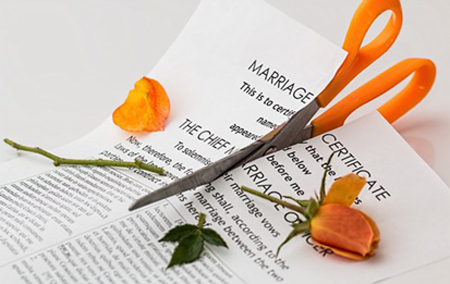
It would be great if marriages lasted forever. It would also be great if you could just walk away from your spouse and call it a day. But in Ontario, as well as the rest of Canada and most of the world, your marriage isn’t over until you obtain a divorce order from the court. There are mechanisms in place that permit a Simple Divorce In Ontario, so that ending your marriage can be simple, efficient and less costly than a drawn out legal battle.
Let’s face it, if your spouse does not want to divorce, or does not agree on dividing your assets, child custody and access, or other issues, you are likely to be in court going through the mess of a “contested divorce.” But a Simple Divorce In Ontario is possible going through an “uncontested divorce.”
One simple way to get this done is to apply for a divorce yourself and, if your spouse does not respond, it will likely be granted without an issue.
Also simple is the situation where you and your partner agree to divorce and how to divvy up assets and care for the children. In such a case, you can jointly apply for an uncontested divorce and come up with terms for how these issues will be dealt with.
Even if you are in agreement, Ontario requires a divorcing couple to meet certain criteria. First, you must have had an actual marriage ceremony and that the marriage has now ended, something demonstrated through not living together anymore, not sleeping in the same bed, etc. If you cannot show this, it may be difficult to obtain an order from the court.
Even when you have an uncontested divorce, you may also need to obtain a religious divorce. This is not done through the courts, but rather from your place of worship or religious organization, something that varies from faith to faith. Often times, without the religious divorce, you may not be able to marry again in that religion.
When it comes to dividing assets, the marital home (or “matrimonial home”) is something each spouse has equal rights to, no matter who the owner of record is. Even if you move out, you retain these rights. However, once you get divorced, if you are not the owner of record, you may still have the right to a share in the value of the home, but you lose the right to stay in the home, because you are not married any more.
These are just a couple of considerations that must be contemplated when seeking to divorce in Ontario. Of course, there are issues regarding children, finances, personal property, jewelry, automobiles, and more. The best way to get through this process as easily as possible is to attempt to agree and apply for a simple divorce. If you cannot, it may get expensive and emotionally exhausting.
Contact us today for an experienced divorce lawyer Toronto.
Family Lawyers for Simple Divorce In Ontario

When a marriage breaks down, there are emotional and legal ramifications. Indeed, there may be the need to divide assets, provide support for spouse and child, arrange custody and access, and deal with other issues. Thankfully, a Simple Divorce Ontario is available to ease the financial and time burdens in order to help couples split on a more amicable basis. This, in turn, can help the family work together to maintain a happy and healthy future.
If you and your spouse are in agreement on most major issues, a Simple Divorce Ontario is highly possible and recommended.
When the emotional distress of lots of dispute is abated, an uncontested divorce is an effective way to end your marriage. Uncontested divorces contemplate the same issues that a contested divorce will, including (i) the distribution of finances and assets, (ii) custody, (iii) access, (iv) support and other issues that may arise.
Upon completing the required application package, it must be filed with the correct government authority. The government will then (i) assign the case a court file number; (ii) place a court seal on the Application; and (iii) provide a Registration of Divorce Proceeding form to fill out. This last document is then provided to Canada’s Department of Justice in order to ensure that the same parties have not registered any other divorce applications. Assuming the review checks out, the Central Registry of Divorce Proceedings will then issue a Clearance Certificate.
Once the Clearance Certificate is received, the entire set of documents must be served on the other spouse and, at times, other necessary parties. Assuming no objections are received, the divorce will be finalized after a period of time. While a contested matter can take many months, if not years, an uncontested divorce can be finalized in a few months.
Even though a Simple Divorce Ontario is a streamlined process, an Ontario court cannot end your marriage unless (i) you have been legally married in Canada or any other country, (ii) you will permanently separate from your spouse or already have done so and you do not believe there is any chance at getting back together and (iii) either you and/or your spouse has resided in Ontario for at least twelve months prior to applying for divorce.
Even those who are not legal married may wish to undergo a “separation” in order to have legal “teeth” in an agreement that officially ends a relationship. Here, the spouses must agree not to live together nor plan in a reunification. Then, the spouses can work out a “separation agreement” by which issues regarding child custody, access and support will be enforceable under Ontario law.
Even when achieving an uncontested divorce, there are strict rules that must be followed. The failure to properly file these forms and satisfy the legal requirements for divorce will greatly slow down the process. For these reasons, it is extremely important, even if uncontested, to retain an experienced divorce lawyer Toronto to handle your separation and divorce.
Equal Sharing of Net Family Property

In order to successfully end a marriage there is need for debts and assets of the marriage to be divided between the marital parties. Upon separation or divorce each spouse is entitled to what is termed and equalization of net family property. The equalization will be carried out for any couple who go to the court for the division of property as opposed to spouses who decide to settle and share the marriage’s net family property between themselves privately for a simple divorce Ontario. Any spouse can apply for equalization from the court in accordance to the Ontario Family Law Act at any time after separation has begun.
Under the Family Law Act, Ontario’s property equalization scheme is called the deferred community of property regime. The deferred community of property regime basically means that when two people enter a marriage each spouse is automatically entitled to an equal share of the profits of that marriage. According to the Family Law Act inherent in the marital relationship each party to the marriage gives an equal contribution to the marriage and hence once the marriage is broken down and there is a divorce the Family Law Act provides that there ought to be an equal sharing of what the parties to the marriage put into the marriage. The Family Law Act seeks to provide for an equitable sharing between the parties to the marriage and this is done so as to compensate the spouses fairly for their equal contribution to the marriage for its duration. Therefore, the assets acquired during the spouse’s marriage are to be divided between the two parties to the marriage equally.
However, while the contribution to the marriage may have been equal there are some circumstances that may see one of the parties to a marriage actively work at depleting the contribution made by themselves as well as by their spouse. When such a circumstance arises this begs the question if both parties to the marriage are still entitled to an equal share of the profits of their marriage despite the actions of the spouse who worked at depleting such profits? The answer depends on the facts surrounding the circumstances that resulted in the depletion of the net family property value or profit. Some actions that have resulted in the court giving an unequal sharing of the net family property are discussed below:
- Reckless investing – this is where a spouse may have been involved in deceit and various acts of financial misconduct designed to hide his or her reckless investments from the other spouse. For example, in respect of the stock market. Thus in order to make such investments a spouse goes so far as to forge the signature of the other spouse and use the other spouse’s credit cards without his or her knowledge. And further, actively works at trying to hide the family’s financial affairs from the other spouse and suffers capital loss as a result of the investments.
- Spending to feed one’s addiction whether alcohol or drugs and thus results in the depletion of the profits of the family.
Uncontested Divorce in Ontario

When filing an uncontested divorce in Ontario
There are two types of cases:
Uncontested Sole Divorce: When both spouses are in agreement about the divorce and do not oppose the divorce, either the husband or wife files the divorce papers with the court asking for the divorce. Once the papers are filed with the court, your spouse is served with the divorce papers. Your spouse then has 30 days to contest or challenge the divorce or make a claim such as for support, property, custody, etc. If your spouse does not challenge the divorce within the required period, the divorce will proceed as “uncontested” and will be finalized by the Ontario court.
Uncontested Joint Divorce: The second way to proceed is to file a joint divorce. In this type of filing, both the husband and wife sign and swear the divorce papers, including the Affidavit of Divorce. Neither spouse is suing the other for divorce – you are simply asking the Ontario court to grant a divorce based on separation. In a joint divorce application, spouses can also jointly ask the court to include an order relating to custody, access, support if both spouses agree to the terms. Couples prefer filing a joint divorce because filing in this manner does not require serving divorce documents on the other spouse.
Divorce Time Frame: The time that it takes to process an uncontested divorce in Ontario varies based on a number of factors. One of these factors may be the courthouse in which your divorce papers are filed. Family courts across Ontario vary in the time they take to process applications. However, as a general time frame, if all the necessary steps are taken and the documents are filed on time, it takes about 2 to 3 months to process the entire uncontested divorce in Ontario.
Clearance Certificate: Once the 8A application for divorce is filed, a document called the “clearance certificate” is sent from the Central Registry of Divorce Proceedings located in Ottawa, Ontario to the courthouse in which the divorce application is filed. This Registry keeps nation-wide records of divorce applications filed after July 2, 1968. If there is another divorce application involving the same two spouses, the Registry lets the courts know. If there are no other divorce applications involving the two spouses, the clearance certificate is sent and the divorce process moves forward. For more information about the Central Registry, you can click here.
I hope we were able to give you some of the information you required in order to make your decision about the type of divorce in Ontario that you will be filing. Whether you are filing a sole divorce or a joint divorce, our Family Lawyer can process your case or guide your decisions. Here is a link to recent publications about Family Law on the Department of Justice website.
Need information on the estimated cost for filing an uncontested divorce in Ontario? Seek FREE Consultation; Apply Online!
NOTICE AND DISCLAIMER: The material posted on this website is for informational purposes only and should not be relied upon as legal advice. If you are in need of legal advice relating to your particular situation it is highly recommended to consult with a lawyer.