
Category: Estate Law and Divorce
Can Divorce Court Deal With Property Outside Canada?
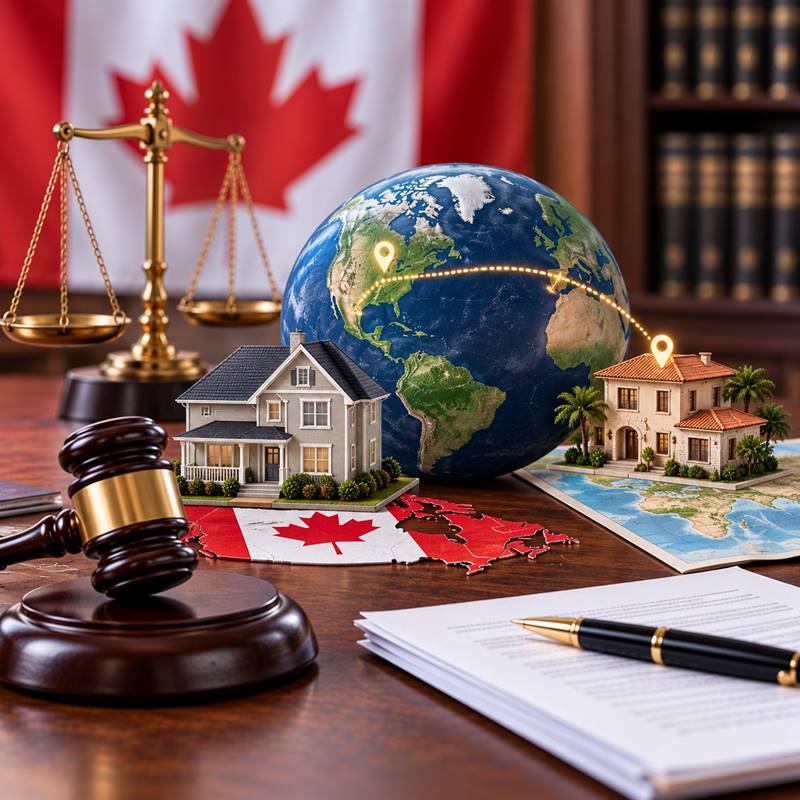
Property Outside Canada in an Ontario Divorce
It is possible for an Ontario court trying to resolve a dispute involving property to have to deal with assets located abroad. Such instances include deciding whether a spouse has an interest in a property located abroad, determining the value of such assets, and how it affects their financial interests.
Nevertheless, an Ontario court does not have unlimited jurisdiction over foreign real estate.
Does Foreign Property Count When Dividing Property in an Ontario Divorce?
It can.
The Net Family Property of a spouse under Ontario’s Family Law Act usually begins with the value of the property owned on the valuation date, less any relevant debts, deductions, and exclusions. The definition of property under the Act is broad and does not say that an asset is immaterial just because it is not in Canada.
For example, a spouse could have an ownership interest in:
- a house in the United States;
- a condominium in Europe or Asia;
- investment property outside Canada;
- vacant or agricultural land overseas;
- property owned jointly with a spouse or another person; or
- other foreign investments or financial assets.
Whether and how the property affects equalization will depend on the facts.
Among the most significant queries may be the date of acquisition, the legal or beneficial ownership of the property, its value on certain dates and the amount of any indebtedness against it. The deduction or exclusion claimed must also meet the criteria set out by Ontario law where applicable.
Can an Ontario Court Directly Order What Happens to Property in Another Country?
Not necessarily.
There is a legal difference between determining the financial rights of spouses who are before an Ontario court and directly exercising authority over foreign land.
An Ontario court may determine that a foreign property has a particular value for an equalization calculation. That does not automatically mean the court can change title registered in another country, direct a foreign land registry to transfer ownership or guarantee that a foreign authority will enforce an Ontario order.
This issue arose in Beites v. Beites, 2025 ONSC 1468, where the spouses owned properties in Ontario, Panama and Texas. The Ontario Superior Court stated that determining equalization could require determining ownership interests and values in both foreign and domestic property. However, the court declined to make the requested exclusive-possession order concerning the Texas property in the circumstances of that case.
In appropriate circumstances, an Ontario court may have in personam jurisdiction, meaning authority to make an order directed at a person who is properly before the court. That is different from exercising direct authority over the foreign property itself.
Does Ontario’s Matrimonial Home Law Apply to a House Outside Ontario?
Ontario has its own special laws regarding the matrimonial home, which include rights regarding possession and disposition. But Part II of the Family Law Act specifically deals with matrimonial homes that are located in Ontario.
Hence, it should not be assumed that a family home located outside Ontario is subject to all the laws related to Ontario matrimonial homes.
How Can a Toronto Divorce Lawyer Help With Property Outside Canada?
With the assistance of a Toronto divorce lawyer, it is possible to find out what information is needed, how this asset might impact Ontario property rights, and if more professionals are needed.
The aim here is to find out what needs to be done early on before it becomes too late.
When Should I Speak With a Toronto Divorce Lawyer?
Legal advice may be particularly useful when:
- either spouse owns significant property outside Canada;
- the property existed before the marriage;
- a gift or inheritance is involved;
- ownership is disputed;
- the property is registered in another person’s name;
- your spouse controls the foreign documents;
- the property may be sold or transferred;
- the valuation is disputed;
- substantial foreign mortgages or debts exist;
- the spouses previously lived together outside Ontario; or
- enforcement in another country may become necessary.
In cases where the couple was living in another jurisdiction before the commencement of separation, determining the right law becomes particularly critical.
Ontario Family Law Act, Section 15 says that rights and interest which emanate from marriage with regards to property belong to the internal laws of the last common habitual residence of the spouses. In situations where there are no common habitual residences, Ontario law applies.
One such case where the property issue does not become a divorce case in Ontario is one which has come from across borders.
What Information Should I Bring to My Lawyer?
Providing organized information at the beginning can make it easier to identify disclosure and valuation issues.
Useful information can include:
- the country where the property is located;
- the full property address;
- the names shown on title;
- when the property was purchased;
- the purchase price;
- how the purchase was funded;
- whether the property was owned before marriage;
- its estimated value at marriage, if applicable;
- its estimated value at separation;
- mortgage and loan balances;
- rental income;
- details of any gift or inheritance connected with the property;
- records of any recent sale or transfer; and
- where the spouses lived together before moving to Ontario.
Clients should also bring whatever supporting documents are available.
It is better to tell the lawyer that a document is missing than to leave the property out of the discussion entirely.
How Can a Lawyer Address a Dispute About Foreign Property Ownership or Value?
The first step is usually identifying exactly what is disputed.
The spouses may agree that property exists but disagree about its value. In another case, they may disagree about whether one spouse has any ownership interest at all.
A lawyer may help by:
- reviewing title and purchase documents;
- identifying additional disclosure that is required;
- requesting missing financial information;
- determining whether valuation evidence is needed;
- reviewing mortgages and related debts;
- assessing claims for deductions or exclusions;
- considering whether preservation relief may be appropriate; and
- coordinating with foreign lawyers, valuators or other professionals where necessary.
Ontario’s Family Law Rules provide a process for requesting additional information where existing financial disclosure is insufficient.
Not every case requires extensive foreign proceedings. The level of investigation should reflect the value of the property, the issues actually disputed and the practical cost of obtaining further evidence.
How Can DivorceGO Help With a Divorce Involving Foreign Property?
DivorceGO can assist Toronto and Ontario clients with the Ontario family-law aspects of a divorce involving foreign assets.
This may include reviewing financial disclosure, examining ownership records and identifying how overseas assets may affect Net Family Property and equalization.
Where valuation is disputed, appropriate appraisal or financial evidence may be considered. Where disclosure is incomplete, further disclosure may be requested using the procedures available in an Ontario family case.
DivorceGO can also assess whether an Ontario court application or preservation order may be appropriate based on the circumstances.
Spouse Refuses to Sell the Matrimonial Home in Ontario

Can Your Spouse Refuse to Sell the Matrimonial Home in Ontario?
A disagreement about selling the family home can become one of the most difficult financial issues after separation.
One spouse may want to sell immediately. The other may want to remain in the property, wait for a different time, or arrange financing to keep it.
Ontario law does not reduce this dispute to a simple question of who wants to sell.
The matrimonial home has special legal treatment under Ontario’s Family Law Act. Ownership, possession, equalization, and the eventual sale of the property are related issues, but they are not the same thing.
A spouse should therefore avoid assuming that being on title gives complete control over the home. Equally, matrimonial-home rights do not automatically mean both spouses legally own 50% of the property.
Does It Matter Whose Name Is on Title?
Yes, title matters, but it does not answer every question.
A matrimonial-home dispute may involve several separate concepts:
- Ownership: Who legally owns the property?
- Possession: Who has the right to occupy the home?
- Property value: What is the home worth?
- Equalization: How is its value considered in the spouses’ broader family-property calculations?
- Sale proceeds: What ultimately happens to the money remaining after a sale and payment of relevant liabilities?
Can One Spouse Sell the Matrimonial Home Alone?
A spouse should not assume that sole ownership means they can simply list and transfer the matrimonial home without dealing with the other spouse’s legal rights.
Ontario’s Family Law Act places restrictions on the disposition or encumbrance of an interest in a matrimonial home. Depending on the circumstances, issues may arise concerning the other spouse’s consent, a separation agreement releasing rights, or court authorization.
This means a proposed sale should be considered in light of:
- how title is registered;
- whether both spouses have ownership interests;
- whether the property remains a matrimonial home for the relevant legal purpose;
- any separation agreement or marriage contract;
- any existing court order;
- possession rights; and
- the specific transaction being proposed.
The same caution applies to refinancing or placing additional financing against the property.
A spouse who wants to sell should first understand what legal steps are actually required rather than assuming the other spouse’s signature is irrelevant.
Does Moving Out Mean You Give Up Your Rights?
Moving out does not automatically transfer ownership or resolve the matrimonial-home issues between spouses.
A spouse who leaves the home may still:
- remain a registered owner;
- remain responsible under the mortgage;
- have property rights that must be addressed;
- have an equalization claim; and
- have an interest in how the property is eventually dealt with.
What Can You Do If Your Spouse Won’t Agree to Sell?
When a spouse refuses to sell, court proceedings are not necessarily the first or only option.
The reason for the refusal can matter.
One spouse may genuinely want to keep the property. Another may disagree with the valuation, proposed listing price, timing, real estate agent, repairs, or arrangements for moving out.
Identifying the actual disagreement can make it easier to determine whether a negotiated solution is possible.
What Should You Check Before Taking Legal Action?
Before escalating the dispute, it may help to work through the following steps.
- Confirm ownership. Obtain reliable information showing who is registered on title.
- Review the mortgage. Determine who signed the mortgage, the outstanding balance, payment obligations, and whether there are other secured debts.
- Establish the home’s current value. A professional appraisal or another appropriate valuation may help reduce arguments about an unrealistic sale or buyout figure.
- Review existing agreements. Check any separation agreement, marriage contract, or temporary written arrangement that deals with the home.
- Check court orders. An existing order dealing with possession, preservation of the property, or another related issue may affect the available options.
- Identify the reason for refusing the sale. There is a practical difference between refusing every sale proposal and requesting time to arrange a realistic buyout.
- Track home expenses. Keep records of mortgage payments, taxes, insurance, repairs, condo fees, and other significant property expenses.
- Assess whether a buyout is realistic. A spouse who wants to keep the home may need to establish that appropriate financing and title arrangements can actually be completed.
Can One Spouse Buy Out the Other Instead of Selling?
A buyout may provide an alternative when one spouse wants to keep the matrimonial home.
However, a buyout involves more than agreeing that one spouse will remain in the property.
The spouses usually need to address the home’s value, ownership interest being transferred, financing, mortgage liability, title transfer, and how the transaction relates to the wider property settlement.
Selling the Home
A sale may involve:
- selecting an agent;
- establishing a listing price;
- accepting an offer;
- paying real estate commissions;
- discharging the mortgage;
- paying closing expenses;
- arranging moving dates; and
- determining how the remaining proceeds will be handled.
One Spouse Buying Out the Other
A proposed buyout may involve:
- obtaining an appropriate property valuation;
- agreeing on the financial terms of the transfer;
- determining how the buyout interacts with equalization;
- refinancing the mortgage;
- qualifying for financing;
- removing the departing spouse from applicable mortgage obligations where the lender agrees;
- transferring title; and
- completing the necessary legal documentation.
A spouse cannot assume that a buyout is feasible simply because both parties agree on a price.
Can an Ontario Court Order the Matrimonial Home to Be Sold?
When Might Court Intervention Be Considered?
Court involvement may be considered where problems such as these cannot be resolved through negotiation:
- one spouse refuses to consider reasonable sale arrangements;
- a spouse will not cooperate with listing the property;
- the spouses cannot agree on an agent or listing price;
- one spouse repeatedly interferes with showings or access;
- there are significant mortgage arrears;
- carrying costs are becoming unaffordable;
- necessary repairs or property preservation are being neglected;
- one spouse wants to complete a buyout but the terms remain disputed;
- an exclusive-possession issue affects the proposed sale; or
- the home dispute is preventing resolution of the wider property settlement.
The appropriate response depends on the specific problem.
For example, a dispute about which agent to appoint may require a different solution from a case where mortgage payments have stopped and the property is at financial risk.
Can a Judge Force the Sale of a Matrimonial Home?
A court may have authority to order the sale of property in appropriate circumstances, but the result should not be treated as automatic.
Ontario’s Partition Act states that parties with specified interests in Ontario land may be compelled to make or suffer partition or sale. It also permits an interested person to apply for partition or a court-directed sale where the statutory requirements are met.
A matrimonial home can raise additional family-law considerations.
For example, the spouses may have possession rights under the Family Law Act. There may also be an existing separation agreement or court order affecting occupation or disposition of the property.
The court application may therefore need to address more than the simple question of whether the home should eventually be sold.
Depending on the circumstances, disagreements may also exist about:
- when the property should be listed;
- which agent should be retained;
- how the listing price is determined;
- how price reductions will be handled;
- whether repairs are necessary;
- who can remain in the property pending closing;
- cooperation with showings;
- acceptance of offers; and
- treatment of the net sale proceeds.
A court order dealing with a matrimonial home dispute can therefore require more detailed terms than simply directing a sale.
How Can a Toronto Divorce Lawyer Help?
A Toronto divorce lawyer can help separate the different legal and financial issues surrounding the matrimonial home.
Depending on the circumstances, a lawyer may:
- review how the property is registered;
- assess matrimonial-home possession rights;
- review agreements and existing court orders;
- examine mortgage and carrying-cost issues;
- help obtain or assess appropriate valuation evidence;
- negotiate a listing and sale process;
- negotiate a proposed buyout;
- draft matrimonial-home terms for a separation agreement;
- consider how the property affects equalization;
- address disputes concerning sale proceeds;
- assess whether court relief may be appropriate; and
- bring or respond to an application concerning the property.
Legal advice can also help a spouse avoid treating ownership, possession, sale proceeds, and equalization as if they were one legal issue.
What Happens to a Mortgage When You Separate in Toronto?

What Happens to a Mortgage Immediately After Separation?
Does Separation Automatically Change a Joint Mortgage?
No. Separation alone does not automatically change a joint mortgage.
If both spouses signed the mortgage, they generally continue to have obligations under that mortgage until the financing is properly changed, paid out, or discharged.
Separation does not automatically:
- Remove one spouse from the mortgage
- Transfer the mortgage to the spouse who stays in the home
- Remove a spouse from title
- Require an immediate sale
- Give one spouse sole ownership
- Approve a refinance
- Release either borrower from the lender’s requirements
This distinction is important because family law obligations and mortgage obligations are not the same thing.
Who Has to Pay the Mortgage After Separation?
Start by checking who is actually named as a borrower.
Where both spouses are borrowers, the lender does not have to treat the mortgage as divided according to the spouses’ private arrangement. Joint borrowers may continue to have responsibility for the debt even if only one spouse is making the monthly payments. FCAC states that joint borrowers are equally responsible for repaying the unpaid balance on jointly borrowed funds.
Does Moving Out Remove You From the Mortgage?
No. Moving out does not remove your name from a mortgage.
A spouse who leaves the property may still be legally responsible under the mortgage agreement if they remain a borrower.
Moving out also does not automatically:
- Remove that spouse from title
- Transfer ownership to the spouse who remains
- End property claims between the spouses
- Give up all rights connected with the home
- Make the spouse staying in the property solely liable to the lender
What Happens If Mortgage Payments Are Missed After Separation?
A disagreement between spouses does not automatically suspend the mortgage.
Missing payments can create serious problems for both the property and the borrowers.
Possible consequences include:
- Mortgage arrears
- Additional interest or charges under the mortgage terms
- Damage to credit
- Mortgage default
- Lender enforcement
- Greater difficulty refinancing later
- More pressure to sell the home
- Increased conflict between the spouses
What Can Separating Spouses Do With the Mortgage and Home?
What Are the Main Mortgage Options After Separation?
Common options include:
| Option | What May Happen to the Mortgage | Main Consideration |
|---|---|---|
| Keep the home temporarily | Existing mortgage may remain unchanged | Both borrowers may remain liable |
| One spouse buys out the other | Mortgage may need refinancing or another lender-approved change | Remaining spouse must satisfy lender requirements |
| Sell the home | Mortgage is generally dealt with from the closing proceeds | Net proceeds and other property issues must be addressed |
| Continue joint ownership temporarily | Existing mortgage may remain in place | Clear payment and exit terms are important |
These are common arrangements, but they are not the only possibilities.
The important point is that the family law settlement does not automatically determine what the lender will approve.
Can One Spouse Buy Out the Other Spouse’s Interest?
Potentially.
A buyout generally means that one spouse keeps the home while the other spouse receives an agreed amount for their interest or as part of the broader property settlement.
The process may involve:
- Determining an appropriate current value for the home
- Confirming the outstanding mortgage balance
- Identifying any home equity line of credit or other secured debt
- Determining the available equity
- Reviewing the home within the broader property-division calculation
- Negotiating the amount required for the settlement or transfer
- Determining whether the spouse keeping the home can obtain suitable financing
- Obtaining lender approval where required
- Completing the title and mortgage documentation
- Coordinating the transaction with the separation agreement
A buyout should not automatically be calculated as:
Home value − mortgage ÷ 2
That formula can be misleading.
For married spouses, Ontario’s equalization of net family property looks beyond the current equity in one asset. Mortgage debt can form part of the property calculation, while the matrimonial home also receives particular treatment under Ontario family law. Ontario’s official property-division guidance specifically includes mortgage debt when explaining net family property calculations.
Other secured debt, ownership interests, valuations and the parties’ broader property positions may also matter.
Is It Better to Buy Out the Other Spouse or Sell the Home?
Neither option is automatically better.
A buyout may allow one spouse to keep the home, but affordability and financing must work. A sale may end the parties’ joint ownership and mortgage arrangement, but the parties still need to deal with the sale process and the resulting proceeds.
| Question | Buyout / Keep Home | Sell Home |
|---|---|---|
| Who keeps the property? | One spouse | Neither spouse |
| What happens to the mortgage? | Financing must remain, change or be replaced | Mortgage is generally dealt with on closing |
| Is lender approval relevant? | Often, particularly where a borrower must be removed or financing changed | Neither spouse generally needs to qualify for a new mortgage simply to sell |
| What happens to the equity? | It must be addressed in the settlement | Net sale proceeds can be addressed in the settlement |
| What about future carrying costs? | They continue for the spouse retaining the home | They generally end for the spouses after closing |
| Main practical challenge | Affordability and financing | Agreeing on sale terms, timing and treatment of proceeds |
How Does the Mortgage Affect Home Equity and Equalization?
The mortgage is important because it reduces the net equity available in the property.
A simplified equity calculation may look like:
Property value − mortgage and relevant secured debt = approximate home equity
However, that calculation does not tell married spouses exactly what each person will receive under Ontario family law.
Ontario’s equalization system looks at each married spouse’s broader net family property, not only the house.
Ontario government guidance identifies the amount remaining on a mortgage as an example of debt considered when calculating net family property.
This means the final property settlement may involve:
- The matrimonial home
- Mortgage debt
- Other real estate
- Bank accounts
- Investments
- Pensions
- Vehicles
- Other debts and liabilities
- Property owned on the date of marriage
- Applicable excluded property
The matrimonial home also receives special treatment.
For example, Ontario’s guidance explains that a married spouse generally cannot deduct the marriage-date value of a home that qualifies as the matrimonial home at separation in the same way certain other marriage-date property may be deducted.
Can a Separation Agreement Decide Who Pays the Mortgage?
Yes. A separation agreement can set out how the spouses will handle the mortgage and other home expenses between themselves.
It may specify:
- Who makes the monthly mortgage payment
- Whether each spouse contributes
- Who pays property taxes
- Who pays home insurance
- Who pays condo fees
- Who covers utilities
- How major repairs are approved
- Who remains in the home
- How the property will be valued
- How a buyout will be calculated
- When refinancing must be attempted
- What happens if refinancing fails
- When the property must be listed for sale
- How sale proceeds will be handled
What Common Mortgage Mistakes Should Separating Homeowners Avoid?
Several assumptions can create unnecessary problems.
Assuming Moving Out Removes Mortgage Responsibility
Physical separation does not automatically remove a borrower from the mortgage.
Stopping Payments Because You No Longer Live There
Leaving the home does not itself suspend obligations to the lender.
Assuming the Spouse Staying in the House Automatically Takes Over the Loan
Occupancy does not automatically transfer mortgage liability.
Believing a Separation Agreement Removes a Borrower
The agreement can allocate responsibility between spouses, but the lender’s contract remains a separate issue.
Agreeing to a Buyout Before Checking Financing
A proposed settlement may fail if the spouse keeping the house cannot obtain the necessary financing.
Ignoring the Mortgage Renewal Date
An upcoming renewal may affect the timing and feasibility of the proposed arrangement.
Transferring Title Without Coordinating the Financing
Ownership and mortgage changes should be structured together where required.
Ignoring Taxes, Insurance or Condo Fees
Mortgage payments are only part of the property’s ongoing carrying costs.
Using an Informal Estimate When Home Value Is Disputed
A valuation dispute can materially affect negotiations where substantial equity is involved.
Assuming Equity Must Simply Be Divided 50/50
For married spouses, equalization considers broader net family property. The current equity in one property is not necessarily the final amount payable between spouses.
How Can DivorceGO Help With Mortgage and Matrimonial Home Issues?
DivorceGO can help separating spouses understand how their home fits into the broader family-law settlement.
Legal assistance may include:
- Reviewing matrimonial-home rights
- Clarifying the difference between mortgage liability and ownership
- Reviewing title information
- Addressing equalization and property division
- Negotiating temporary mortgage-payment arrangements
- Developing buyout terms
- Setting refinancing deadlines
- Creating fallback sale provisions
- Addressing property valuation
- Allocating carrying costs
- Drafting matrimonial-home provisions in a separation agreement
- Addressing what happens if refinancing fails
The lawyer’s role should also be distinguished from the lender’s role.
A family lawyer can negotiate and document the arrangement between spouses. The lender still determines whether it will approve refinancing, release a borrower or provide new financing.
Net Family Property (NFP)

Net Family Property – Complete Breakdown
Net Family Property (NFP) is the value of a spouse’s assets minus debts at the date of separation, adjusted for what they owned at marriage. In Ontario, the difference between each spouse’s NFP is equalized through a payment, ensuring both parties share the financial gains accumulated during the marriage fairly.
Key Takeaways
- NFP determines how property is divided in Ontario divorce
- Both assets and debts are included in calculations
- The valuation date (date of separation) is critical
- Equalization ensures fair sharing of financial growth
- Full financial disclosure is legally required

What is Net Family Property (NFP) in Ontario?
Net Family Property (NFP) is a legal calculation used under Ontario’s family law system to determine how wealth is divided when a marriage ends. Instead of physically splitting every asset, the law compares each spouse’s financial growth during the marriage.
What does Net Family Property mean in simple terms?
It represents how much your net worth increased during the marriage. The goal is to ensure both spouses benefit equally from that growth.
Why does Ontario use the NFP system?
Ontario uses this system to promote fairness. It recognizes that both spouses contribute to the marriage, whether financially or through non-financial roles like caregiving.
How NFP differs from “splitting everything 50/50”
You do not divide each asset equally. Instead, the difference in total net worth is balanced through an equalization payment.
How is Net Family Property Calculated?
Understanding the calculation is essential to avoid mistakes.
What assets are counted at the date of separation?
All assets owned on the valuation date are included, such as:
- Real estate
- Bank accounts
- Investments
- Vehicles
- Business interests
What debts are deducted?
All liabilities are subtracted, including:
- Mortgages
- Loans
- Credit card balances
Why the marriage date matters in calculations
The value of assets owned at the time of marriage is deducted. This ensures only the increase in wealth during the marriage is shared.
Step-by-Step: How to Calculate NFP in Divorce
- Identify all assets at separation
- Subtract all debts and liabilities
- Determine the value of assets at marriage
- Deduct marriage-date property
- Apply excluded property rules
- Calculate final Net Family Property
Each spouse completes this calculation separately. The difference between the two amounts determines the equalization payment.
What is Included in Net Family Property?
Most assets acquired or owned during the marriage are included.
Real estate and the matrimonial home
The matrimonial home is always included, even if owned by one spouse before marriage.
Bank accounts and investments
Savings, stocks, and other investments are part of NFP.
Pensions and retirement savings
Pensions can be one of the most valuable assets and must be properly valued.
Business interests and shares
Ownership in a business is included and often requires professional valuation.
Vehicles and personal property
Cars, furniture, and valuable personal items are also considered.
What is excluded from Net Family Property?
Some assets may be excluded if specific conditions are met.
Inheritances and gifts
Assets received as gifts or inheritances may be excluded if kept separate.
Personal injury settlements
Compensation for personal injury may also be excluded.
Property protected by agreements
A marriage contract or agreement can exclude certain assets.
Why excluded property can lose protection
If excluded assets are mixed with joint property (for example, used to buy a home), they may lose their excluded status.
What is Equalization Payment in Ontario?
Equalization is the core of Ontario’s property division system.
How equalization is calculated
The spouse with the higher NFP pays half the difference to the other spouse.
Who pays the equalization amount
The spouse with greater financial growth during the marriage typically pays.
Why equalization is not always a 50/50 split of assets
It equalizes value, not physical assets. One spouse may keep assets but compensate the other financially.
Common Mistakes in NFP Calculations
Errors in calculation can significantly impact your financial outcome.
Failing to disclose all assets
Incomplete disclosure can lead to penalties or court intervention.
Incorrect property valuations
Underestimating or overestimating assets can distort results.
Misunderstanding excluded property
Many assume assets are excluded when they are not.
Overlooking debts and liabilities
Forgetting debts can artificially inflate NFP.
Not documenting financial changes
Missing records can weaken your position in disputes.
Why Financial Disclosure is Critical in Divorce
Full and honest financial disclosure is a legal requirement in Ontario.
What full financial disclosure includes
Income, assets, debts, expenses, and financial history must be disclosed.
Legal consequences of hiding assets
Courts may impose penalties, reopen settlements, or award costs.
How courts handle incomplete disclosure
Judges can make adverse inferences and rule against the non-disclosing party.
How a Divorce Lawyer Helps with NFP
Professional legal guidance can significantly affect the outcome.
Ensuring accurate calculations
A lawyer ensures all assets and debts are properly accounted for.
Identifying hidden or undervalued assets
Legal professionals know how to uncover missing financial information.
Negotiating fair settlements
Lawyers help achieve balanced outcomes without unnecessary litigation.
Protecting your financial interests
Strategic advice helps you avoid costly mistakes and protect long-term stability.
Real Example: Net Family Property Calculation
Example of assets and debts at separation
Spouse A has $500,000 in assets and $100,000 in debts = $400,000 NFP
Spouse B has $200,000 in assets and $50,000 in debts = $150,000 NFP
Example of marriage-date deductions
If Spouse A brought $100,000 into the marriage, it is deducted from their NFP.
Final equalization calculation explained simply
Difference = $250,000
Equalization payment = $125,000 paid to the lower NFP spouse
Frequently Asked Questions
How is NFP different from property division in other provinces?
Ontario uses an equalization system that focuses on financial growth during marriage, rather than dividing each asset. Other provinces may follow different property-sharing rules, making Ontario’s approach unique.
Do both spouses always split property 50/50?
Not exactly. Ontario equalizes the increase in wealth, not each asset. One spouse may keep certain assets but compensate the other through an equalization payment.
What happens if one spouse hides assets?
If a spouse hides assets, the court may impose penalties, adjust the division in favour of the other spouse, or reopen the case even after settlement.
Is the matrimonial home always included in NFP?
Yes. The matrimonial home is always included in the calculation, even if one spouse owned it before the marriage, making it a unique and important asset in Ontario divorce law.
How Divorce Affects Your Will and Estate Plan

Key Takeaways
- Divorce in Ontario automatically revokes gifts to a former spouse in a will
- Executor roles assigned to an ex-spouse are usually revoked after divorce
- Separation alone does not change your will or estate plan
- Beneficiary designations (RRSPs, insurance) must be updated manually
- Outdated estate plans can cause disputes and unintended asset distribution
- Working with Divorce Lawyers ensures your estate plan reflects your current wishes
What Happens to Your Estate Plan during Separation vs Divorce
Many people assume separation has the same legal effect as divorce. This is incorrect.
Separation does not automatically change your will or estate documents. Your spouse may still inherit under your will and retain decision-making authority if named.
This creates significant risk. If you pass away during separation, your spouse could still receive assets or act as executor.
For example, a separated spouse listed as a beneficiary on multiple accounts may still inherit everything. This outcome often contradicts your intentions.
To avoid this, estate planning updates should begin immediately after separation, not just after divorce is finalized.
How Divorce Affects Beneficiary Designations
Not all assets are governed by your will. Certain accounts pass directly to named beneficiaries, including:
- RRSPs and RRIFs
- TFSAs
- Life insurance policies
- Pension plans
Divorce does not automatically revoke beneficiary designations on these assets.
If your former spouse is still listed, they may receive these funds regardless of your will. This is one of the most common and costly estate planning mistakes.
You must contact financial institutions and update each designation individually. Simply updating your will is not enough.
Impact on Powers of Attorney and Estate Trustees
Your Power of Attorney (POA) documents allow someone to make decisions about your finances and personal care if you become incapable.
If your ex-spouse is listed as your attorney, they may continue to hold this authority unless you revoke it. Divorce does not automatically cancel these appointments.
This can lead to serious concerns. An ex-spouse could legally manage your finances or make healthcare decisions on your behalf.
To prevent this, you should:
- Revoke existing POA documents
- Create new ones with trusted individuals
- Ensure copies are distributed and properly stored
Intestacy Risks: What If You Don’t Update Your Will?
If your will becomes invalid or incomplete after divorce, your estate may fall under Ontario intestacy laws.
This means your assets are distributed according to a fixed formula, not your personal wishes.
Typically, assets may be divided among:
- Children
- Other relatives
- In some cases, a legally recognized spouse
While divorce removes your ex-spouse’s entitlement under intestacy, complications can still arise. For example, disputes between children and new partners are common.
Having a clear, updated will avoids these risks entirely.
How Divorce Impacts Jointly Owned Property and Estate Distribution
Property ownership plays a critical role in estate planning. Many couples own assets as joint tenants, which allows property to pass automatically to the surviving owner.
After separation or divorce, this arrangement may no longer reflect your intentions.
If joint tenancy is not severed:
- Your ex-spouse may automatically inherit the property
- The asset will bypass your will entirely
Converting ownership to tenants in common allows your share to be distributed according to your will.
This step is often overlooked but is essential for protecting your estate.
Estate Planning Considerations for Blended Families
Divorce often leads to blended families, where individuals have children from previous relationships.
This creates unique estate planning challenges. You may want to:
- Protect assets for your children
- Provide for a new partner
- Avoid conflicts between beneficiaries
Using trusts is a common strategy. For example, a trust can provide income to a new spouse while preserving the principal for children.
Careful planning ensures your estate is distributed according to your priorities without triggering disputes.
Tax Implications and Estate Planning After Divorce
Estate planning after divorce also involves tax considerations.
Key issues include:
- Capital gains tax on property transfers
- Tax treatment of registered accounts
- Potential tax liabilities upon death
For example, transferring property during divorce may defer taxes, but future estate planning decisions can trigger them.
Coordinating legal and financial advice helps minimize tax exposure and protect your estate’s value.
Steps to Update Your Will and Estate Plan After Divorce
Updating your estate plan requires a structured approach. Key steps include:
- Review your current will and estate documents
- Create a new will reflecting your current wishes
- Update all beneficiary designations
- Replace executors and Powers of Attorney
- Consult Divorce Lawyers and estate professionals
- Store documents securely and inform trusted individuals
Each step ensures your estate plan aligns with your post-divorce circumstances.
When Should You Update Your Estate Plan? Timing Matters
Timing is critical when updating your estate plan.
You should:
- Begin updates during separation
- Finalize changes after divorce is granted
- Review your plan after major life changes
Delaying updates increases the risk of unintended outcomes. Even a short gap can lead to legal complications.
Consistent reviews ensure your estate plan remains accurate over time.
Common Estate Planning Mistakes After Divorce
Many individuals make avoidable mistakes after divorce. The most common include:
- Failing to update beneficiary designations
- Leaving an ex-spouse as executor or POA
- Assuming divorce updates all documents automatically
- Ignoring changes in family structure
- Not seeking legal guidance
These errors can result in costly disputes and unintended asset distribution.
How Divorce Lawyers Can Help Protect Your Estate
Divorce lawyers play a critical role in aligning your estate plan with your legal status.
They can:
- Identify gaps in your current documents
- Coordinate family law and estate planning strategies
- Ensure compliance with Ontario legislation
- Help prevent future litigation
Professional guidance ensures your estate plan is both legally sound and practically effective.
Frequently Asked Questions
Does divorce automatically cancel my will in Ontario?
No. Divorce results in a partial revocation, removing provisions related to your former spouse while leaving the rest of the will intact.
Do I need a new will after divorce?
Yes. Creating a new will ensures your estate reflects your current intentions and avoids confusion.
What happens if my ex-spouse is still listed as a beneficiary?
They may still receive assets like insurance or registered accounts unless you update those designations.
Can my ex-spouse still act as my executor after divorce?
In most cases, the appointment is revoked. However, naming a new executor is essential to avoid complications.
Are beneficiary designations affected by divorce?
No. These must be updated manually, as they are not governed by your will.
What happens if I die during separation but before divorce?
Your spouse may still inherit under your will and retain authority under existing estate documents.
The Relationship between Estate Law and Divorce

Where Estate Law and Divorce Overlap
In Ontario, the intersection of family and estate law is governed by several key statutes. The Divorce Act sets out the rules for divorce and corollary relief, including spousal support. The Family Law Act addresses property division and equalization of net family property upon separation or divorce. From an estate perspective, the Succession Law Reform Act governs wills and dependant support claims, while the Estates Act outlines estate administration procedures.
A critical distinction is that separation alone does not automatically revoke a will. By contrast, divorce may revoke certain spousal entitlements under Ontario law. Timing is crucial: if a spouse dies during separation but before divorce is finalized, surviving spouses may still assert significant estate and property rights, sometimes leading to unexpected and costly litigation.
What Happens to a Will After Separation or Divorce?
Under Ontario law, separation alone does not automatically revoke gifts made to a spouse in a will. If estate documents are not updated, a separated spouse may still remain a beneficiary or even act as executor. This creates significant risk, particularly where the relationship has broken down but no formal divorce has been granted. The will remains legally valid unless changed.
Once a divorce is finalized, Ontario legislation generally treats a former spouse as having predeceased the testator for the purpose of gifts and executor appointments, effectively revoking those provisions in most cases. However, there are exceptions depending on how the will is drafted and when it was executed. For this reason, it is essential to update estate documents immediately following separation or divorce.
If someone dies intestate (without a valid will), marital status becomes critical. A legally married spouse may still have inheritance rights, whereas a separated but not divorced spouse could potentially claim under Ontario’s estate laws.
Beneficiary Designations and Divorce
Beneficiary designations on registered accounts are often overlooked during separation and divorce. In Ontario, assets such as RRSPs, RRIFs, TFSAs, and many pension plans pass directly to the named beneficiary outside the estate. These designations are contractual and generally operate independently of a will.
The same principle applies to life insurance policies. A beneficiary designation is separate from testamentary instructions. Divorce does not always automatically remove a former spouse as the designated beneficiary, particularly if the policy holder fails to update the paperwork after the divorce is finalized.
Failing to review these financial instruments can result in unintended inheritance outcomes. A former spouse may receive substantial funds despite contrary intentions. This can also create disputes between the estate and the designated beneficiary, especially where other dependants or children expected to inherit. Careful post-separation review is essential to avoid costly litigation.
Equalization of Net Family Property and Estate Claims
Under Ontario’s Family Law Act, married spouses are entitled to an equalization of Net Family Property upon divorce. The calculation compares each spouse’s net worth at the date of separation, deducts the value of property owned at marriage (with certain exclusions), and determines whether an equalization payment is owed. This is a statutory right designed to ensure fairness in the division of accumulated wealth.
If one spouse dies before equalization is resolved, the surviving married spouse may face a significant legal choice. They can either take what is left to them under the will or elect to pursue an equalization claim against the estate.
From a strategic standpoint, estate planning during separation is critical. Parties must balance asset protection with compliance under Ontario family law to avoid unintended financial exposure.
Dependant Support Claims After Divorce
Under Ontario’s Succession Law Reform Act, certain individuals may qualify as dependants and bring a claim against an estate. In some circumstances, former spouses can qualify if they were receiving, or were legally entitled to receive, support at the time of death and remained financially dependent.
Support obligations do not necessarily end with death. If adequate provision has not been made, a court may vary the testamentary distribution to satisfy a dependant support claim. This can significantly alter the intended estate plan.
From a risk management perspective, careful structuring of spousal support arrangements, combined with appropriate life insurance planning, can help ensure obligations are met while preserving certainty for beneficiaries.
Matrimonial Home and Estate Implications
In Ontario, the matrimonial home has special status under the Family Law Act. Both married spouses have an equal right to possession, regardless of whose name appears on title. This right continues until there is a court order or written agreement stating otherwise.
If a spouse dies during separation, property ownership and family law rights may conflict. Even where one spouse holds legal title, the surviving married spouse may still assert possessory or equalization rights against the estate.
Ownership structure also matters. Joint tenancy includes a right of survivorship, meaning the property automatically passes to the surviving joint owner. Severing joint tenancy and converting to tenants-in-common may be appropriate in some separation situations.
Powers of Attorney and Divorce
During marriage, it is common for spouses to appoint one another under a Continuing Power of Attorney for Property. This document allows the appointed person to manage financial affairs if the grantor becomes incapable. Similarly, a Power of Attorney for Personal Care authorizes someone to make health and medical decisions.
Separation or divorce does not automatically revoke these appointments. If documents are not updated, a former spouse may retain significant authority over finances or medical care. This can create serious personal and legal complications.
For that reason, Powers of Attorney should be reviewed and revised immediately upon separation to ensure decision-making authority reflects current intentions.
Estate Planning During Separation
Separation is a critical time for interim estate planning. Wills should be updated immediately to reflect changed intentions, particularly if a spouse remains named as beneficiary or executor. Beneficiary designations on registered accounts and life insurance policies should also be reviewed to prevent unintended transfers outside the estate.
Trust planning can offer additional protection. Testamentary or inter vivos trusts may help safeguard children’s inheritances while managing ongoing financial obligations, including support commitments.
Coordination between family and estate lawyers is essential. Strategies developed in isolation can conflict, exposing clients to litigation or unintended tax and property consequences. Integrated planning ensures compliance with Ontario law while protecting long-term objectives.
Common Legal Mistakes Ontarians Make
Many Ontarians make avoidable errors during separation and divorce that later create estate disputes. A common mistake is failing to update a will after separation, leaving a former spouse as beneficiary or executor. Others assume that divorce automatically corrects all estate planning issues, which is not always the case. Pension plans, RRSPs, and life insurance designations are frequently overlooked. Couples also neglect to sever joint tenancy on real property when appropriate, unintentionally preserving survivorship rights. Most importantly, delaying legal advice can compound financial and litigation risks that could have been prevented with timely planning.
How Lawyers Provide Integrated Advice
Experienced Ontario lawyers approach separation and divorce with an integrated lens, reviewing both family law and estate planning documents together. This holistic strategy ensures that wills, beneficiary designations, Powers of Attorney, and property arrangements align with ongoing family law obligations and court orders.
A comprehensive risk assessment helps identify potential litigation exposure, including equalization claims, dependant support issues, and unintended beneficiary outcomes. Proactive planning can significantly reduce the likelihood of estate disputes after death.
Integrated advice also focuses on long-term protection safeguarding children’s inheritances, preserving business interests, and managing complex assets while ensuring full compliance with Ontario’s legal framework.
How Marriage Contracts Affect Estate Planning in Ontario
Marriage Contracts under Ontario Law
In Ontario, marriage contracts are governed by Part IV of the Family Law Act (Ontario), which addresses domestic contracts. A marriage contract often referred to as a prenuptial agreement if signed before marriage must meet strict legal requirements to be valid. It must be in writing, signed by both parties, and witnessed. Without these formalities, the agreement may not be enforceable.
Marriage contracts can address a wide range of financial matters, including property ownership during the marriage, how assets will be divided upon separation, and whether spousal support will be paid (and in what amount). However, there are important limitations. A marriage contract cannot override a child’s right to support, and a court may set aside provisions that are unconscionable, signed without full financial disclosure, or obtained under duress.
Estate Law Framework in Ontario
Estate matters in Ontario are primarily governed by the Succession Law Reform Act (Ontario) and the Estates Act (Ontario). These statutes outline how a person’s estate is distributed upon death, whether under a valid Will or on an intestacy (when there is no Will).
When a married person dies, the surviving spouse has important legal rights. Under the Family Law Act, a spouse may elect for an equalization of net family property instead of taking under the Will. In addition, a spouse (or other dependant) may bring a dependant support claim under the Succession Law Reform Act if adequate provision has not been made.
Equalization on Death and the Role of Marriage Contracts
- a) Surviving Spouse’s Right to Elect
In Ontario, when a married person dies, the surviving spouse has a significant legal choice. Instead of accepting what is left to them under the deceased’s Will, the spouse may elect to receive an equalization of net family property under the Family Law Act. This election treats the death similarly to a separation for property division purposes. The surviving spouse must make this decision within the prescribed time limits, and the choice can substantially affect the estate’s distribution.
- b) How a Marriage Contract May Waive Equalization
A properly drafted marriage contract can include a clear waiver of equalization rights. If the waiver is valid meaning there was full financial disclosure and no duress it can prevent a surviving spouse from claiming equalization on death.
- c) Strategic Considerations
Such provisions are often used to protect business interests, preserve family wealth, or ensure assets pass to children from a prior relationship.
Impact on Wills and Testamentary Gifts
- a) Coordinating the Will with the Marriage Contract
A marriage contract and a Will must work together, not against each other. If a Will leaves assets to a surviving spouse that contradict the terms of a marriage contract such as a prior waiver of property rights this can create confusion and legal disputes. Careful drafting ensures both documents reflect the same intentions and financial arrangements.
- b) Waivers of Inheritance Rights
If spouses intend to waive inheritance rights, the language in the marriage contract must be clear and explicit. Courts in Ontario will closely scrutinize such provisions, especially where substantial assets are involved.
- c) Risks of Failing to Update Estate Documents
Failing to align estate documents with a marriage contract can lead to costly litigation between the estate and the surviving spouse, delaying administration and increasing legal expenses.
Beneficiary Designations and Marriage Contracts
- a) Registered Accounts and Insurance
In Ontario, many assets pass outside the estate through beneficiary designations. These commonly include RRSPs, RRIFs, TFSAs, and life insurance policies. Because these assets transfer directly to the named beneficiary, they are not governed solely by the terms of a Will.
- b) Contractual Waivers vs. Designations
A marriage contract may include a waiver of rights to certain assets. However, such a waiver does not automatically change a beneficiary designation. If a spouse remains listed as beneficiary, the financial institution may still pay proceeds to that spouse unless steps are taken to update the designation.
- c) Practical Review after Marriage or Contract Execution
After signing a marriage contract or getting married, it is essential to review and update all beneficiary designations to ensure they reflect your estate planning intentions.
Matrimonial Home and Estate Implications
- a) Special Status of the Matrimonial Home
Under Ontario’s Family Law Act, the matrimonial home has a unique legal status. Regardless of whose name is on title, both spouses have an equal right to possession during the marriage. These possessory rights cannot be unilaterally removed and are treated differently from other property.
- b) Can a Marriage Contract Override These Rights?
A marriage contract can address ownership and equalization rights in the matrimonial home, but any waiver must be clear and explicit. Courts will carefully review such provisions to ensure fairness and informed consent.
- c) Ownership Structure Considerations
How the home is held joint tenancy or tenants-in-common can significantly affect estate outcomes, particularly with respect to survivorship rights and distribution under a Will.
Dependant Support Claims Despite a Marriage Contract
- a) Who May Claim as a Dependant
Under Ontario’s Succession Law Reform Act, a surviving spouse, former spouse, child, or other individual who was financially dependent on the deceased at the time of death may bring a dependant support claim. The key issue is whether adequate provision was made for their proper support.
- b) Court’s Power to Vary Testamentary Provisions
Even if a valid marriage contract exists, the court retains the authority to order support from the estate. A contractual waiver does not automatically prevent a dependant support application.
- c) Balancing Contractual Freedom and Fairness
Ontario courts balance the parties’ freedom to contract with the need to ensure fairness and prevent hardship, particularly where vulnerability or financial need is established.
How Lawyers Coordinate Marriage Contracts and Estate Plans
- a) Integrated Legal Strategy
Effective planning in Ontario often requires collaboration between family law and estate law counsel. By coordinating advice under the Family Law Act and the Succession Law Reform Act, lawyers ensure that a marriage contract and estate documents work together as part of a cohesive strategy.
- b) Clear Waiver Language
Proper drafting includes precise language that specifically addresses equalization rights on death and any intended waiver of inheritance rights. Vague clauses increase the risk of later court challenges.
- c) Ongoing Review
Marriage, the birth of children, business growth, or significant changes in assets should trigger a review of both the marriage contract and the estate plan to maintain consistency and legal effectiveness.
Protecting Your Assets with a Skilled Toronto Lawyer

Challenges Faced by Business Owners
Business Valuation: Accurately determining the fair market value involves understanding not only the current financial status but also the future earnings potential, market position, and intangible assets of the company. Skilled Toronto lawyers, in collaboration with business valuation experts, ensure an accurate and fair assessment.
Dividing Business Assets: After establishing the business valuation, dividing business assets becomes a multifaceted challenge involving legal, financial, and emotional considerations. Strategies such as one spouse buying out the other’s interest, selling the business and dividing proceeds, or continuing co-ownership require careful consideration and strategic planning. Guidance from a skilled divorce lawyer is invaluable in navigating these decisions.
Future Business Operations: The impact of divorce on business operations is profound. Ensuring smooth business operation during the divorce process requires tactful management of personal and professional boundaries.
Role of a Skilled Toronto Lawyer
The landscape of divorce, particularly for business owners, is fraught with complexities that span legal, financial, and emotional dimensions. A skilled Toronto lawyer plays a crucial role in navigating these intricacies, offering expertise that is pivotal in safeguarding the business owner’s assets and ensuring the continued success of their business.
Navigating Complexities
A proficient lawyer can adeptly handle the nuances of divorce proceedings for business owners by:
- Expert Valuation and Asset Division: They collaborate with financial experts to accurately assess the value of the business, which is crucial for fair asset division.
- Strategic Legal Counsel: Lawyers provide strategic advice on the legal ramifications of divorce on the business.
- Negotiation and Settlements: With their negotiation skills, lawyers work towards settlements that safeguard the business owner’s interests.
Protecting Assets through Legal Strategies
To protect assets in the context of a divorce, skilled lawyers employ various legal strategies, tailored to the unique circumstances of each business owner:
- Prenuptial Agreements: By defining the treatment of business assets before marriage, prenuptial agreements can significantly simplify asset division in the event of a divorce, ensuring the business remains unaffected.
- Shareholder Agreements: In businesses with multiple owners, shareholder agreements can include specific clauses that address divorce scenarios.
- Establishing Trusts: Transferring business assets into a trust can shield them from the divorce proceedings.
- Postnuptial Agreements: These agreements, formulated after marriage, can specify the handling of business assets in case of a divorce. They are particularly useful if the business’s value changes significantly during the marriage or if the business was founded post-marriage.
Asset Protection Strategies
Navigating a divorce for business owners involves not only managing the emotional and logistical complexities but also ensuring the protection and continuity of their business interests. Skilled lawyers play a crucial role in devising and implementing asset protection strategies that safeguard the business’s integrity and value.
Key Asset Protection Strategies
Buy-Sell Agreements: Buy-sell agreements are a preemptive measure that outlines what happens to a business owner’s share of the company in the event of personal life changes, including divorce. These agreements can specify that an owner’s interest in the business must be sold back to the company or remaining owners, often at a predetermined price, to prevent business shares from becoming part of divorce proceedings. This keeps the business intact and operations undisturbed while ensuring the departing owner is fairly compensated.
Restructuring the Business: Restructuring can involve changing the legal structure of the business (e.g., from a sole proprietorship to a corporation) or reorganizing the business’s assets and liabilities.
Asset Protection Trusts: Establishing an asset protection trust can offer a secure way to shield business assets. By transferring ownership of the business into a trust, the business owner effectively removes these assets from their personal estate. This means that in the event of a divorce, the assets within the trust are not considered personal property subject to division. It’s crucial that these trusts are established well in advance of any divorce proceedings to avoid them being contested as fraudulent transfers.
Postnuptial Agreements: While prenuptial agreements are set up before marriage, postnuptial agreements are established after a couple has married. These can include specific provisions regarding the handling of business assets in the event of a divorce, offering a layer of protection that can be particularly useful if the business was founded or significantly appreciated in value after the marriage.
Exploring Creative Settlement Options
Instead of the traditional approach of liquidating assets to divide them, lawyers can propose creative settlement options that protect the business’s integrity. This can include:
- Structured Payments: If one party is to retain the business, they might compensate the other over time, allowing the business to remain operational without the need for immediate liquid assets.
- Retaining Shares with Conditions: The non-operating spouse might retain shares in the business under specific conditions, like receiving dividends without having a say in day-to-day operations, protecting both parties’ interests.
- Alternate Compensation: Offering alternative assets of equivalent value to the business interest, ensuring the business remains undisturbed while maintaining fairness in asset division.
Balancing the Interests of Both Parties
The cornerstone of achieving a fair settlement lies in the lawyer’s ability to balance the interests of both parties. This entails:
- Understanding and Acknowledging Both Parties’ Contributions: Recognizing the contributions (financial, managerial, or otherwise) of both spouses to the business and considering them in the settlement discussions.
- Emphasizing Long-Term Solutions over Short-Term Gains: Focusing on solutions that ensure long-term viability for the business and financial security for both parties, rather than short-term financial gains that might harm the business.
- Maintaining Objectivity: Lawyers serve as objective advisors, helping clients to see beyond the emotional aspects of the divorce and focus on practical, equitable outcomes.
- Protecting Confidentiality: Ensuring that sensitive business information shared during negotiations remains confidential to protect the business’s competitive edge.
How Toronto Divorce Lawyers Handle Complex Asset Division

Complex Asset Division
Divorce proceedings can turn stressful and emotionally charged, with the division of assets often standing out as a particularly contentious issue. In Toronto, as in many jurisdictions globally, Toronto divorce lawyers frequently grapple with the nuances of complex asset division.
Types of Complex Assets
- Businesses: Dividing business assets emerges as a significant challenge. Businesses, especially those family-owned or closely held, necessitate a thorough evaluation to ascertain their true value and to determine a division strategy that minimally disrupts operations.
- Investments: This category includes stocks, bonds, mutual funds, and retirement accounts, whose values are subject to market fluctuations, complicating equitable division at any moment.
- International Properties: Properties located abroad introduce complexity due to differing laws, currency exchange rates, and tax consequences. Navigating foreign legal systems to accurately assess and divide these assets demands specialized expertise.
Challenges in Valuing Complex Assets
Valuing complex assets involves a multifaceted approach that requires input from financial analysts, appraisers, and occasionally, international legal consultants. Key challenges include:
- Market Fluctuations: The valuation of investments and real estate can vary significantly due to market conditions, complicating fair valuation efforts.
- Hidden Assets and Income: Instances where one party conceals assets or under reports income to influence asset division unfavorably necessitate forensic accounting skills to uncover.
- Tax Implications: Asset division carries substantial tax implications, impacting the net value received by each party.
Impact of Prenuptial Agreements and Postnuptial Agreements
Prenuptial and postnuptial agreements play a pivotal role in asset division during divorce, outlining asset division terms upfront. However, the enforceability of these agreements may come into question based on allegations of undue influence, coercion, or lack of proper legal counsel at the time of signing.
Considerations for High-Net-Worth Individuals
Individuals with significant wealth face distinctive challenges due to the diversity and complexity of their asset portfolios, which may include multiple real estate holdings, extensive investment portfolios, and varied business interests.
Role of Divorce Lawyers in Complex Asset Division
When a Toronto divorce involves a significant amount of complex assets, retaining an experienced lawyer becomes essential. Here’s a closer look at how Toronto divorce lawyers navigate complex asset division:
Expertise in Financial and Property Law
Toronto divorce lawyers possess a deep understanding of both family law and financial law. This combined expertise allows them to:
- Interpret relevant legislation: They ensure the division of assets adheres to Ontario’s Family Law Act, which outlines the principles of equalization and how to determine the net family property.
- Identify and classify assets: Lawyers meticulously identify all marital assets and debts, including those that may be hidden or commingled with personal property.
- Analyze complex financial documents: They can decipher tax returns, financial statements, and investment reports to understand the true value of the marital estate.
- Draft clear and comprehensive settlement agreements: Lawyers translate complex legal and financial concepts into clear and concise language, safeguarding your rights and interests in the final agreement.
Use of Financial Experts for Asset Valuation
Accurately valuing complex assets is critical for an equitable division. Toronto divorce lawyers frequently collaborate with a team of financial experts, including:
- Forensic Accountants: These specialists can uncover hidden assets, trace financial transactions, and provide independent valuations of businesses and other illiquid assets.
- Investment Advisors: They offer expertise in valuing complex investment portfolios, including stocks, bonds, and private equity holdings.
- Appraisers: Lawyers may call upon appraisers to determine the fair market value of real estate, art collections, or other valuable assets.
Strategies for Equitable Distribution
Toronto divorce lawyers are skilled negotiators who advocate for your fair share of the marital assets. Their strategies may include:
- Gathering evidence: Lawyers meticulously compile financial documents, expert reports, and other evidence to support your claim.
- Evaluating settlement offers: They analyze proposals from your spouse’s lawyer, identifying potential shortcomings and negotiating for a more equitable distribution.
- Creative solutions: Lawyers explore various options, such as splitting assets in kind, assigning future income streams, or utilizing tax-efficient strategies to ensure a fair outcome for both parties.
Through skilled negotiation, Toronto divorce lawyers strive to achieve a mutually agreeable settlement that avoids the stress and expense of litigation.
When Negotiations Fail
If negotiations reach an impasse, Toronto divorce lawyers are prepared to represent you effectively in court.
- Preparing legal arguments: Lawyers meticulously prepare arguments based on relevant case law and the principles of the Family Law Act.
- Presenting evidence: They effectively present evidence gathered during negotiations, including expert reports and financial statements, to support your position.
- Protecting your interests: Lawyers advocate zealously for your interests throughout the court proceedings, ensuring your fair share of the marital assets is secured.
Strategies Employed by Toronto Divorce Lawyers
Toronto divorce lawyers navigate the intricate process of divorce with a suite of strategies designed to ensure fair outcomes and protect their clients’ interests. From unearthing hidden assets to creatively negotiating settlements that benefit both parties, their approaches are as varied as they are effective.
Forensic Accounting for Hidden Assets
One of the first moves for many Toronto divorce lawyers is deploying forensic accounting techniques to unearth hidden assets. In high-stake divorces, it’s not uncommon for one party to attempt to conceal assets to skew the division in their favor.
Protecting Client Interests in Court and Out of Court
Above all, the paramount strategy is the unwavering commitment to protecting clients’ interests, whether in the negotiation room or the courtroom. When disputes escalate to litigation, the same commitment to the client’s welfare drives lawyers to present compelling evidence, argue effectively before the court, and strive for a verdict that honors their client’s rights and contributions. Whether strategizing behind the scenes or advocating publicly, the focus is always on securing the best possible outcome for the client.