
Category: Marriage Contract
How to Ask Your Partner for a Marriage Contract

Understanding What a Marriage Contract Covers
A marriage contract, commonly referred to as a prenuptial agreement, is a legally binding document that outlines how financial and property matters will be handled during a marriage and in the event of separation or divorce. In Ontario, marriage contracts are governed by Part IV of the Family Law Act, which allows couples to create agreements addressing various financial aspects of their relationship.
A marriage contract can be signed before or during marriage and is often used to clarify each partner’s financial rights and responsibilities, helping to prevent disputes in the future.
What Can and Cannot Be Included in a Marriage Contract
While a marriage contract offers flexibility in defining financial matters, there are clear legal limitations on what it can cover.
✅ Permitted Provisions in a Marriage Contract:
- Property Division – Specifies how assets and debts will be divided in case of separation.
- Spousal Support – Determines whether one spouse will pay financial support to the other and under what conditions.
- Inheritance & Estate Rights – Protects family assets or ensures certain assets remain with designated heirs.
- Business Interests – Safeguards one spouse’s business from claims in the event of divorce.
🚫 What Cannot Be Included in a Marriage Contract:
- Child Custody & Access – Future custody and access arrangements cannot be pre-decided, as courts prioritize the best interests of the child at the time of separation.
- Child Support – Any agreement that waives or limits child support obligations is not legally enforceable.
- Unfair or Unconscionable Terms – Courts can overturn contracts if they are significantly unfair, signed under duress, or fail to disclose important financial information.
How a Marriage Contract Differs from a Cohabitation Agreement
A cohabitation agreement serves a similar purpose as a marriage contract but is specifically for unmarried couples who are living together. If a couple with a cohabitation agreement later marries, their agreement automatically becomes a marriage contract unless stated otherwise.
Key Differences:
| Feature | Marriage Contract | Cohabitation Agreement |
| Who It’s For | Married couples or those planning to marry | Unmarried couples living together |
| Becomes Invalid Upon Marriage? | No, remains enforceable | No, but it automatically converts to a marriage contract unless modified |
| Covers Property & Financial Matters? | Yes | Yes |
| Includes Child Custody or Support? | No | No |
Understanding the scope of a marriage contract can help you navigate the conversation with your partner and ensure both of you are fully informed before making any legal commitments.
In the next section, we will explore strategies to bring up the conversation with your partner in a respectful and constructive manner.
Timing the Conversation: When to Bring It Up
Bringing up the idea of a marriage contract can be challenging, but timing plays a crucial role in ensuring a positive and productive discussion. If approached correctly, it can lead to greater financial clarity and mutual understanding between partners.
The Best Time to Introduce the Topic
While every couple is different, legal and relationship experts generally recommend discussing a marriage contract at the earliest appropriate stage in the relationship—preferably before engagement or early in wedding planning.
Best Times to Discuss a Marriage Contract:
- Before Engagement: If you anticipate the need for a marriage contract, bringing it up before engagement allows for open discussions without the pressure of wedding planning.
- Early in Wedding Planning: If the engagement has already happened, it’s best to raise the topic well in advance—ideally six to twelve months before the wedding—to allow enough time for thoughtful discussions and legal review.
- When Discussing Finances: If you and your partner are already discussing financial goals, debts, or property ownership, it’s a natural time to introduce the idea of a marriage contract.
By addressing the topic early, both partners can participate in the discussion with less emotional stress and more rational decision-making.
Avoiding Pressure or Last-Minute Decisions
One of the biggest mistakes couples make is waiting until the last minute to introduce the idea of a marriage contract. Presenting a contract shortly before the wedding can create pressure, resentment, or even legal challenges.
🚫 Why You Should Avoid Last-Minute Discussions:
- Legal Concerns: If a contract is signed under pressure, it could be challenged in court and possibly deemed invalid under Ontario’s Family Law Act.
- Emotional Tension: Bringing it up too close to the wedding could cause stress and potential conflict, taking away from the excitement of the upcoming marriage.
- Limited Legal Advice: Both partners need time to seek independent legal advice (which is required in Ontario for the contract to be enforceable).
💡 Tip: If the wedding date is approaching and the conversation hasn’t happened yet, consider postponing the contract discussion until after marriage. A marriage contract can be signed after the wedding, as long as both partners agree.
Ensuring Both Partners Have Ample Time to Consider Legal Implications
Since a marriage contract involves legally binding financial decisions, both partners should have sufficient time to consult with their lawyers and fully understand the terms before signing.
✅ Best Practices for Giving Your Partner Time to Consider the Agreement:
- Start the conversation well in advance. Aim for at least six months before the wedding.
- Encourage independent legal advice. Each partner should have their own lawyer to review the contract, as required under Ontario law.
- Discuss it gradually. Instead of a one-time conversation, revisit the topic over multiple discussions to ensure both parties are comfortable.
- Keep it neutral and open-minded. Frame it as a tool for mutual financial security, not a sign of distrust.
Preparing for the Conversation
Discussing a marriage contract can be a sensitive topic, but preparation is key to ensuring the conversation goes smoothly. Before bringing it up with your partner, you should educate yourself about Ontario’s family laws, seek legal advice, and frame the discussion as a collaborative decision rather than a demand.
1. Educating Yourself on Ontario’s Family Laws
A marriage contract falls under Part IV of Ontario’s Family Law Act, which governs property division and spousal support in the event of separation or divorce. Understanding these laws can help you explain why a marriage contract is beneficial and ensure that any agreement is fair and enforceable.
Key Legal Considerations in Ontario:
- Property Division: In the absence of a marriage contract, the equalization of net family property rule applies. This means that assets acquired during the marriage are typically divided equally, regardless of who contributed more financially.
- Spousal Support: If a couple separates, one spouse may be entitled to spousal support, depending on factors such as income disparity, length of marriage, and financial dependence. A marriage contract can set out or limit spousal support obligations.
- What a Marriage Contract Cannot Do: It cannot determine child custody, parenting time, or child support, as these decisions are made based on the child’s best interests at the time of separation.
By understanding these legal principles, you can communicate the benefits of a marriage contract in a clear and informed way.
2. Consulting with a Toronto Family Lawyer
Before discussing a marriage contract with your partner, it’s wise to consult with an experienced family lawyer who specializes in Ontario’s marital laws. A lawyer can:
- Explain how Ontario’s laws apply to your situation.
- Help you identify what terms should be included in the contract.
- Ensure the agreement is legally enforceable and does not contain provisions that could be challenged in court.
- Offer guidance on how to present the idea in a way that is non-confrontational.
Why Legal Advice Matters:
In Ontario, for a marriage contract to be valid, both parties must receive independent legal advice before signing. If a court finds that one spouse did not understand the terms or was pressured into signing, the contract could be deemed unenforceable.
3. Approaching the Topic as a Partnership, Not a Demand
The way you introduce the idea of a marriage contract can set the tone for the entire conversation. Instead of presenting it as a one-sided request, emphasize that it is about mutual financial clarity and protection.
Best Ways to Frame the Conversation:
✅ Use “we” instead of “I”
💬 “I think it would be a good idea for us to have a conversation about how we want to handle our finances in the future.”
✅ Explain the benefits for both partners
💬 “A marriage contract can help protect both of us and give us peace of mind, no matter what happens in the future.”
✅ Acknowledge emotions and concerns
💬 “I understand that this can be a difficult conversation, and I want us to approach it together in a way that feels fair to both of us.”
What to Avoid:
🚫 Making it seem like a lack of trust – Instead of saying, “I need to protect my assets,” say, “This is about ensuring we both feel secure.”
🚫 Bringing it up during an argument – The discussion should happen when both partners are calm and open to dialogue.
🚫 Using ultimatums – Saying, “I won’t marry you without this contract,” can make your partner feel pressured rather than involved in a shared decision.
By preparing properly and framing the conversation as a partnership, you can increase the chances of a productive discussion and a fair agreement.
How to Approach the Discussion with Your Partner
Discussing a marriage contract can be an emotional conversation, so it’s important to approach it with sensitivity, transparency, and respect. A well-planned discussion can help both partners feel comfortable and ensure that the agreement is viewed as a mutual safeguard, rather than a sign of distrust.
1. Choosing the Right Setting
The environment in which you bring up a marriage contract can significantly impact the tone of the conversation. Choosing a private, relaxed setting allows both partners to discuss the topic openly, without distractions or external pressures.
✅ Best Settings for the Conversation:
- At home during a quiet moment – Avoid bringing it up right before bed or during a stressful day.
- During a weekend getaway or a casual dinner – A comfortable and neutral environment can help ease tension.
- When discussing financial goals – If you’re already talking about budgeting, investments, or future plans, it may feel like a natural transition.
🚫 Settings to Avoid:
- During wedding planning stress – If emotions are already running high, the topic may feel overwhelming.
- At a family gathering – This is a personal discussion and should not be influenced by others.
- After an argument – The topic should be approached from a place of cooperation, not conflict.
2. Using Positive Framing
The way you frame the discussion can determine whether your partner sees the marriage contract as a positive tool or a negative obligation. Emphasizing fairness and protection for both partners is key.
✅ How to Frame It Positively:
💬 “I want us to be on the same page financially so that we can have a strong foundation for our marriage.”
💬 “This isn’t about expecting our marriage to fail, but about having an open and honest agreement in place for our future.”
💬 “A marriage contract is a way to protect both of us and ensure fairness in case life takes an unexpected turn.”
Avoid language that makes it seem like only one partner benefits, such as:
🚫 “I need to protect my assets.”
🚫 “This is something my lawyer says I should do.”
🚫 “I don’t want to lose money if we ever get divorced.”
Instead, keep the conversation focused on mutual benefits and the importance of having financial clarity.
3. Acknowledging Emotions
It’s natural for your partner to feel a mix of emotions when discussing a marriage contract, including concerns about trust and commitment. Validating these emotions and addressing concerns with empathy can help make the conversation smoother.
✅ How to Address Emotional Concerns:
- If they feel the contract is unnecessary:
💬 “I completely understand why this might feel uncomfortable, but this isn’t about not trusting each other. It’s about making financial matters clear from the start so that we don’t have to worry about them later.” - If they think it’s planning for divorce:
💬 “I know this might seem like we’re thinking about separation before we’re even married, but in reality, this is about making decisions together while we’re in a good place, rather than leaving them to chance.” - If they feel singled out:
💬 “This isn’t just for me; it’s for both of us. A marriage contract ensures we both know where we stand financially and that everything is fair.”
Recognizing and addressing these concerns with patience and reassurance can help your partner feel heard and understood.
4. Encouraging Questions
A marriage contract should be a mutual decision, not something one partner imposes on the other. Encouraging your partner to ask questions and express concerns will help them feel involved and ensure they understand the agreement fully.
✅ How to Encourage Open Dialogue:
💬 “I want to hear your thoughts on this—what do you think about the idea of a marriage contract?”
💬 “Are there any specific concerns you have that we should talk through together?”
💬 “Would you feel more comfortable discussing this with a lawyer to get a better understanding?”
Providing your partner with resources, such as links to Ontario’s Family Law Act, information from trusted family lawyers, or examples of fair agreements, can also help them feel more informed.
Addressing Common Objections and Concerns
When bringing up a marriage contract, your partner may have concerns or misconceptions about what it means for your relationship. Some people see it as a sign of distrust, while others think it only applies to the wealthy. Addressing these objections with calm, thoughtful responses can help ease worries and lead to a productive discussion.
Objection 1: “Do you think we will get divorced?”
This is one of the most common reactions when discussing a marriage contract. Many people assume that suggesting a contract means you’re expecting the marriage to fail.
✅ How to Respond:
💬 “No, I don’t think we will get divorced, but life is unpredictable. This is just a way to ensure that we’ve already made important financial decisions in case anything unexpected happens.”
💬 “A marriage contract is like an insurance policy. We don’t expect to get into a car accident, but we still get auto insurance because it’s a responsible step. This is the same idea—it’s about planning ahead so that we don’t have to worry about it later.”
💬 “Having a contract doesn’t mean we don’t trust each other. It means we’re being open and responsible about financial matters, which can actually strengthen our relationship.”
By emphasizing that the contract is a precautionary measure, not a sign of doubt, you can reassure your partner that this is about clarity, not lack of commitment.
Objection 2: “Isn’t this only for the wealthy?”
Some people believe that marriage contracts are only necessary for couples with large estates, businesses, or substantial wealth. In reality, they benefit couples at all financial levels.
✅ How to Respond:
💬 “Marriage contracts aren’t just for the super-rich. They’re for anyone who wants financial clarity and fairness in their relationship. It can help us decide in advance how we want to handle property, debts, and financial responsibilities.”
💬 “Even if we don’t have a lot of assets right now, we may accumulate wealth in the future. A marriage contract ensures that whatever we build together is managed in a way we both agree on.”
💬 “Without a marriage contract, Ontario’s Family Law Act automatically determines how our property is divided if we ever separate. A contract gives us control over these decisions instead of leaving it up to the courts.”
Even couples with modest assets or debts can benefit from a marriage contract, as it can define financial responsibilities and prevent future disputes.
Objection 3: “Will this hurt our relationship?”
Some partners worry that bringing up a marriage contract signals a lack of trust or might create tension in the relationship.
✅ How to Respond:
💬 “I actually think having honest conversations about finances and legal matters can make our relationship stronger. It helps us be completely open with each other, which builds trust.”
💬 “Money is one of the biggest causes of stress in relationships. If we address these topics now and have a clear plan, we can avoid misunderstandings later.”
💬 “This isn’t about us planning to break up—it’s about us working together as a team to make responsible financial decisions.”
By framing the conversation as an opportunity to strengthen your relationship, you can help your partner see the contract as a tool for teamwork rather than conflict.
The Legal Process of Drafting a Marriage Contract in Ontario
Once you and your partner agree on the idea of a marriage contract, the next step is to ensure it is legally enforceable under Ontario law. The process involves seeking independent legal advice, ensuring fairness, full financial disclosure, and proper execution of the agreement.
1. Importance of Independent Legal Advice for Both Partners
For a marriage contract to be enforceable in Ontario, both parties should seek independent legal advice (ILA) before signing. This means that each partner must consult with separate lawyers to review the agreement.
💡 Why Independent Legal Advice Matters:
- Ensures that both partners fully understand the terms of the contract.
- Prevents claims of coercion or undue influence, which could lead to the agreement being overturned in court.
- Helps confirm that the contract complies with Ontario’s Family Law Act and does not contain provisions that may be challenged.
If one partner refuses to seek legal advice, they may later claim they did not understand what they were signing, which could weaken the enforceability of the contract.
2. Ensuring the Contract is Voluntary, Fair, and Properly Executed
A marriage contract must be signed voluntarily, without pressure or coercion, and must be fair to both parties. If a court determines that a contract is unconscionable or was signed under duress, it may declare the agreement invalid.
✅ Best Practices for a Fair Marriage Contract:
- Ensure that both partners have sufficient time to review and negotiate the agreement.
- Avoid bringing up the contract too close to the wedding date, as this could be seen as undue pressure.
- Keep the agreement balanced—if it is heavily one-sided, a court may overturn it.
- Include provisions that address potential changes in circumstances (e.g., career shifts, children, health issues).
💡 Example: If one partner waives their right to spousal support in the contract, but later faces financial hardship, a court may deem that clause unfair and set it aside.
3. Required Financial Disclosure Under Ontario Law
A full and honest financial disclosure is a critical requirement when drafting a marriage contract. Under Ontario’s Family Law Act, both partners must provide a detailed list of their:
- Assets (real estate, investments, businesses)
- Debts and liabilities (loans, mortgages, credit card debt)
- Income and financial obligations
💡 Why Financial Disclosure is Crucial:
- Prevents one party from hiding assets or debts.
- Ensures fairness—a contract may be set aside if a spouse later discovers significant undisclosed assets.
- Helps both partners make informed decisions before signing.
If financial disclosure is incomplete or inaccurate, a judge may invalidate the marriage contract in a legal dispute.
4. Signing in the Presence of Witnesses and Legal Professionals
For a marriage contract to be legally binding in Ontario, it must be:
- In writing (verbal agreements are not enforceable).
- Signed by both partners voluntarily.
- Signed in the presence of a witness (who must also sign the document).
A lawyer, notary public, or other legal professional can act as a witness to ensure that the agreement meets all legal formalities.
💡 Final Checklist for a Legally Valid Marriage Contract in Ontario:
✔️ The contract is written and signed by both partners.
✔️ Each partner has received independent legal advice from separate lawyers.
✔️ The agreement is voluntary, without coercion or pressure.
✔️ Full financial disclosure has been exchanged.
✔️ The contract is witnessed and properly executed.
By following these steps, you can ensure that your marriage contract is strong, legally enforceable, and fair to both partners.
What Happens If You Don’t Have a Marriage Contract?
Many couples assume that they don’t need a marriage contract because they trust each other or believe they will handle financial matters fairly if they ever separate. However, without a contract, Ontario’s default family law rules will determine how assets and debts are divided, which may not align with your preferences.
How Ontario’s Default Property Division Rules Apply
In Ontario, if a couple separates without a marriage contract, the Family Law Act dictates how property and assets are divided. The main principle used is called equalization of net family property (NFP).
💡 How Equalization Works:
- Each spouse calculates their net worth at the date of marriage and again at the date of separation.
- The increase in value during the marriage is divided equally between both spouses.
- The spouse with the higher net family property pays the other spouse an equalization payment to ensure a fair division of assets.
🚨 Key Takeaways Without a Marriage Contract:
- If you owned property before marriage, the increase in its value may be shared with your spouse unless you protect it in a contract.
- If you receive a business inheritance, it could be subject to division if it is mingled with marital assets.
- Debts incurred during the marriage can also be split, even if one spouse was solely responsible for them.
💡 Example: If one spouse owns a home before marriage, and its value increases significantly, the appreciation in value may be shared with the other spouse, unless a marriage contract specifies otherwise.
Risks of Equalization Without a Clear Agreement
Without a marriage contract, couples must follow Ontario’s default laws, even if they never intended to share assets in a particular way.
❌ Risks of Not Having a Marriage Contract:
- You could lose control over your personal assets—property, businesses, or investments may be divided in a way you didn’t expect.
- If one spouse sacrifices career opportunities (e.g., stays home to raise children), they may later seek spousal support, which might have been addressed differently in a marriage contract.
- Family businesses or inheritances could be at risk, especially if their value increases significantly during the marriage.
💡 Example: Without a contract, if one partner starts a business during the marriage, half of its value may belong to the other spouse upon separation, even if they had no involvement in running it.
Potential Disputes Over Spousal Support and Asset Division
If a marriage contract is not in place, spousal support and property division can become contentious issues during separation.
- Spousal Support Claims: If one spouse earns significantly more than the other, the lower-earning spouse may seek long-term financial support based on factors like income disparity, duration of the marriage, and their financial dependency.
- Legal Costs: Disagreements over who gets what can lead to expensive legal battles that could have been avoided with a clear contract.
- Emotional Stress: Without an agreement in place, partners often experience confusion, frustration, and uncertainty about their financial futures.
💡 Example: If one partner earns $150,000 a year and the other earns $50,000, spousal support could be required for years after separation, even if both partners originally agreed they would be financially independent. A marriage contract could have defined support terms in advance to prevent disputes.
What is a Marriage Contract and Who Needs One in Ontario?
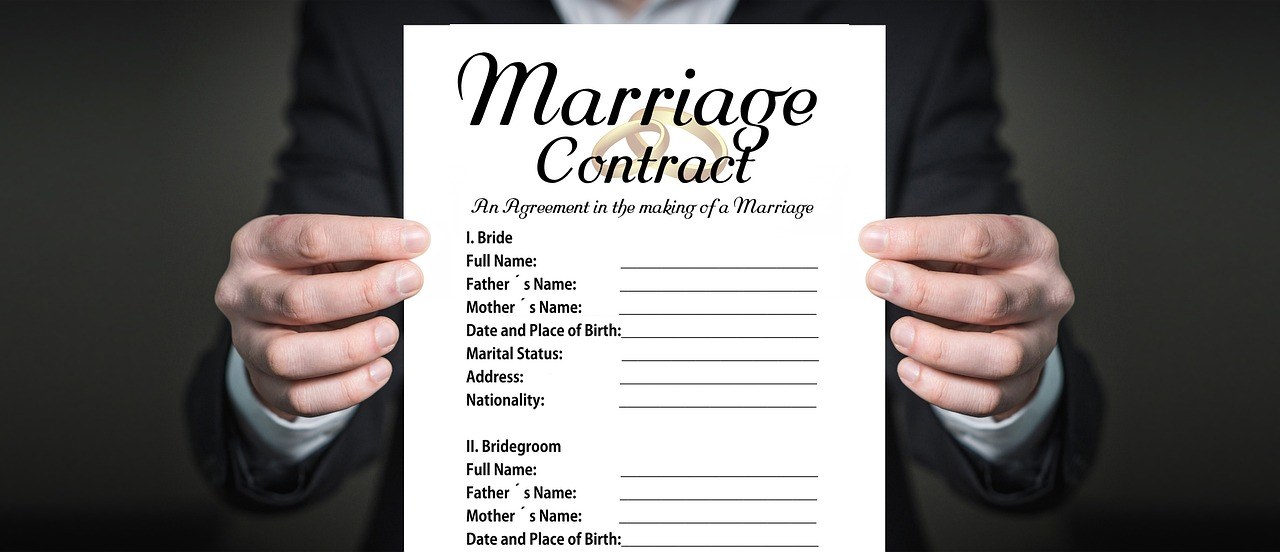
When Can You Create a Marriage Contract?
Before Marriage (Prenuptial Agreement)
A prenuptial agreement is a type of marriage contract that is signed before a couple gets married. In Ontario, this type of agreement allows partners to decide in advance how to divide property, debts, and other financial matters in the event of separation or divorce.
Why Consider a Prenuptial Agreement?
- Protect Individual Assets: If one partner has significant assets (e.g., real estate, investments, a business), a prenup can help protect these assets.
- Clarify Financial Roles: A prenup sets clear expectations about financial responsibilities during the marriage.
- Debt Protection: It can outline who will be responsible for debts acquired before or during the marriage.
- Second Marriages: Those entering a second marriage may want to protect assets for children from a previous relationship.
Important Considerations:
- Full Financial Disclosure: Both parties must fully disclose their assets, debts, and income for the agreement to be valid.
- Independent Legal Advice: Each partner should consult their own Ontario family lawyer to ensure the contract is fair and legally binding.
- Cannot Address Child Custody/Support: Under Ontario law, prenuptial agreements cannot dictate child custody or child support arrangements.
During Marriage (Postnuptial Agreement)
A postnuptial agreement is a marriage contract created after the couple is already married. While similar to a prenuptial agreement in terms of content, it is established during the marriage rather than before.
Why Consider a Postnuptial Agreement?
- Change in Circumstances: If there are significant changes in financial circumstances (e.g., inheritance, starting a business), a postnuptial agreement can help protect those assets.
- Debt Management: One partner may incur substantial debt, and the couple may want to clarify who is responsible for it.
- Marital Issues: Couples experiencing marital challenges might use a postnuptial agreement to resolve financial concerns and strengthen the relationship.
- Protecting Children’s Inheritance: For couples with children from previous relationships, a postnuptial agreement can protect inheritances.
Important Considerations:
- Fairness and Transparency: Both parties must be transparent about their financial situation and agree to fair terms.
- Mutual Consent: A postnuptial agreement must be entered into voluntarily by both spouses.
- Legal Validity: To ensure enforceability, each spouse should seek independent legal advice.
What Can a Marriage Contract Cover in Ontario?
Division of Property and Assets
A marriage contract can clearly define how property, real estate, and investments will be divided if the marriage ends. This can help avoid disputes and ensure each partner’s assets are protected.
Examples of Property and Assets Covered:
- Personal Property: Items such as jewellery, vehicles, or collectibles can be specified as belonging to one partner.
- Real Estate: Ownership of homes, cottages, or other real estate can be protected.
- Investments: Stocks, bonds, RRSPs, and other investments can be designated for individual ownership.
- Business Interests: If one partner owns a business, the contract can outline how the business assets will be handled.
Spousal Support Terms
A marriage contract can outline whether spousal support (alimony) will be paid in the event of a separation or divorce. It can also specify the amount, duration, and conditions under which support will be paid.
Key Considerations for Spousal Support:
- Waiving Support: Couples can agree to waive spousal support entirely.
- Fixed Amounts: Define a fixed amount of support to be paid, regardless of future changes in income.
- Conditions: Specify conditions that would trigger or end spousal support (e.g., remarriage of the recipient).
Debt Responsibility
A marriage contract can clarify how debts will be managed if the relationship ends. This is particularly useful when one partner enters the marriage with significant debt or if new debts are incurred during the marriage.
Examples of Debt Clauses:
- Pre-Marriage Debts: Each partner may remain responsible for debts they brought into the marriage.
- Joint Debts: Outline how joint debts, such as mortgages or loans, will be divided.
- Debt Protection: Protect one partner from being liable for the other partner’s individual debts.
Exclusions
While a marriage contract can cover many financial aspects of a relationship, there are certain matters it cannot address under Ontario law:
- Child Custody: Decisions regarding child custody and access cannot be predetermined in a marriage contract.
- Child Support: Child support obligations are determined based on the Child Support Guidelines and cannot be waived or defined in a marriage contract.
- Unfair or Illegal Terms: Any provisions that are deemed unfair, coercive, or against public policy will not be enforceable.
Who Needs a Marriage Contract in Ontario?
- Individuals with Significant Assets
If you have substantial wealth, real estate, investments, or valuable personal property, a marriage contract can help ensure these assets are protected in the event of a separation or divorce.
- Business Owners or Entrepreneurs
Owning a business or being involved in partnerships makes it essential to safeguard your business interests. A marriage contract can specify that the business remains separate property and outline how business assets are treated.
- Second Marriages or Blended Families
For those entering a second marriage or with blended families, a marriage contract can help clarify financial expectations and protect inheritances for children from previous relationships.
- People Expecting an Inheritance
If you expect to receive a significant inheritance, a marriage contract can ensure that these inherited assets remain protected and separate from marital property.
- Couples with Financial Disparity
When there is a significant difference in financial status between partners, a marriage contract can help balance financial responsibilities and ensure that both parties are protected.
Benefits of Having a Marriage Contract
- Asset Protection
A marriage contract helps ensure that personal and family wealth, such as real estate, investments, and inheritances, are safeguarded. This is particularly important for those with significant assets or business interests.
- Financial Clarity
By defining financial responsibilities and expectations, a marriage contract reduces ambiguity. Both partners know exactly how assets and debts will be managed, providing a clear financial framework for the marriage.
- Reducing Conflict
In the event of a separation or divorce, a marriage contract minimizes disputes over asset division, spousal support, and debt management. This can lead to a smoother and less contentious process.
- Peace of Mind
Having a marriage contract in place can strengthen trust and security in the relationship. Both partners can enter the marriage knowing that their financial interests are protected, which can lead to greater confidence in their future together.
How to Create a Legally Valid Marriage Contract in Ontario
- Full Financial Disclosure
For a marriage contract to be legally binding, both parties must share complete and accurate financial information. This includes details of:
- Assets (e.g., property, investments, bank accounts)
- Liabilities (e.g., debts, loans, mortgages)
- Income sources
Failure to provide full disclosure can render the contract invalid.
- Independent Legal Advice
Each party should consult their own lawyer to review the terms of the marriage contract. Independent legal advice ensures that:
- Both parties fully understand the contract’s terms and implications.
- Neither party was coerced or pressured into signing.
- The contract is fair and enforceable.
- Written and Signed Agreement
A marriage contract must be:
- In Writing: Verbal agreements are not legally enforceable.
- Signed by Both Parties: Each partner must willingly sign the contract.
- Witnessed: Having the contract witnessed adds an extra layer of validity.
A properly drafted and signed agreement is essential to ensure the contract will be upheld in court if challenged.
Common Misconceptions About Marriage Contracts
Marriage contracts are only for the wealthy.
Many people believe that marriage contracts are only necessary for individuals with significant wealth or high-value assets. In reality, marriage contracts are beneficial for anyone who wants to clarify financial expectations and protect their interests, regardless of income level. Whether you own a home, have savings, or carry debt, a marriage contract can help ensure fairness and clarity in case of separation.
It means we don’t trust each other.
Some couples avoid marriage contracts because they believe it implies a lack of trust. However, a marriage contract is not about doubting your partner’s intentions. Instead, it’s a proactive way to ensure both partners are on the same page regarding financial responsibilities. Creating a marriage contract can actually strengthen a relationship by fostering open communication and transparency.
Marriage contracts can’t be changed.
It’s a common misconception that once a marriage contract is signed, it cannot be altered. In Ontario, marriage contracts can be amended if both parties agree to the changes. Circumstances can evolve, and updating the contract to reflect new financial situations, inheritances, or family changes ensures it remains fair and relevant.
Marriage Contracts for Second Marriages in Toronto | Key Considerations

Why a Marriage Contract is Important in Second Marriages
Protecting Pre-Marital Assets
In second marriages, both partners may enter the relationship with existing assets, such as property, investments, or businesses acquired from previous relationships. A marriage contract allows couples to clearly define which assets are to remain separate property and which will be shared in the marriage.
Key Considerations:
- Family Law Act Provisions: In Ontario, the Family Law Act governs property division. Without a marriage contract, assets accrued during the marriage are generally split equally in the event of a separation. A marriage contract can specify that certain pre-marital assets remain protected.
- Protecting Business Interests: If one partner owns a business, a marriage contract can help shield it from claims by the other spouse in case of a divorce, ensuring the business remains operational and unaffected by personal legal matters.
- Real Estate and Property: If a partner owns real estate before the marriage, a marriage contract can confirm that the property remains theirs, even if the value appreciates during the marriage.
Clarifying Financial Responsibilities
Second marriages often involve more complex financial situations. A marriage contract can outline each partner’s financial roles and responsibilities, preventing potential misunderstandings or conflicts.
Key Considerations:
- Contribution to Expenses: Clearly defining how household expenses, mortgage payments, and utility bills will be shared can help avoid disputes. For example, one partner may cover mortgage payments while the other handles daily expenses.
- Debt Management: If either partner has debt from a previous relationship, a marriage contract can specify that this debt remains their individual responsibility, protecting the other spouse from potential liability.
- Spousal Support Clauses: In the event of separation, a marriage contract can outline whether spousal support will be paid and under what conditions, offering clarity and security for both parties.
Blended Families and Inheritance Planning
In second marriages, blended families are common, and ensuring that children from previous relationships inherit their fair share is a priority. A marriage contract can be a crucial part of inheritance planning, helping to protect the interests of all family members.
Key Considerations:
- Preserving Children’s Inheritance: Without a marriage contract, assets may automatically pass to a surviving spouse, potentially disinheriting children from a previous relationship. A marriage contract can ensure that specific assets or a portion of the estate are preserved for these children.
- Estate Planning Integration: In Ontario, it’s important to align a marriage contract with your will and estate plan. Working with a family law lawyer to ensure consistency between these documents can prevent future legal disputes.
- Life Insurance and Trusts: Including provisions for life insurance policies or establishing trusts in a marriage contract can help guarantee financial security for children and other beneficiaries.
Key Differences between First and Second Marriages
More Complex Financial Situations
Second marriages typically involve more intricate financial dynamics compared to first marriages. By the time people enter a second marriage, they may have accumulated significant assets, debts, or financial obligations.
Key Considerations:
- Accumulated Assets: These can include real estate, retirement savings, investments, or businesses from previous relationships. Protecting these assets requires detailed planning and clear documentation in a marriage contract.
- Existing Debts: One or both partners may enter the marriage with debt, such as loans, mortgages, or credit card balances. A marriage contract can specify who is responsible for these debts to avoid misunderstandings.
- Financial Obligations: Alimony, child support, or other financial commitments from previous marriages can impact household finances. Clarifying how these obligations will be managed within the new relationship is crucial.
Responsibilities to Children from Previous Marriages
Blending families brings additional responsibilities and obligations, particularly when children from previous relationships are involved.
Key Considerations:
- Child Support: If one partner is paying child support, a marriage contract can ensure that these obligations are respected and do not affect the new household’s financial stability.
- Inheritance Rights: Protecting the inheritance rights of children from a previous marriage is a key consideration. A marriage contract can outline how assets will be distributed to ensure fairness for all children.
- Balancing Needs: Ensuring that both new and existing children’s needs are met can be complex. A marriage contract helps set clear expectations and reduces potential conflicts.
Emotional Considerations
Second marriages often come with emotional baggage from previous relationships. Transparency and fairness are essential to building trust and confidence in the new marriage.
Key Considerations:
- Fairness: A marriage contract should be fair to both partners. It’s important to discuss the terms openly and ensure that both parties feel respected and protected.
- Trust and Communication: Open discussions about finances, responsibilities, and expectations help foster trust. A well-drafted marriage contract reflects these conversations and provides a foundation for a healthy relationship.
- Transparency: Full financial disclosure is not only a legal requirement but also an emotional necessity. Being transparent about assets, debts, and obligations helps avoid misunderstandings and resentment.
Essential Clauses to Include in a Marriage Contract for Second Marriages
1. Asset Protection Clause
This clause outlines which assets each partner is bringing into the marriage and ensures these assets remain protected in the event of separation.
Key Considerations:
- Specify real estate, investments, vehicles, or personal property.
- Detail any appreciation of asset value and how it will be treated.
2. Spousal Support Clause
This clause defines whether spousal support will be paid and under what conditions.
Key Considerations:
- Set clear terms for support, including amounts and duration.
- Include conditions for waiving spousal support, if agreed upon.
3. Debt Responsibility Clause
Clarifies who is responsible for pre-existing debts and any new debts incurred during the marriage.
Key Considerations:
- Outline which debts remain individual and which, if any, are shared.
- Include guidelines for managing joint loans or credit lines.
4. Inheritance and Estate Planning Clause
Ensures children and other beneficiaries are accounted for in inheritance planning.
Key Considerations:
- Detail how assets will be distributed to children from previous marriages.
- Integrate with your will and estate plan for consistency.
5. Business Protection Clause
Protects business interests by ensuring they remain separate from marital property.
Key Considerations:
- Identify business assets and specify that they remain individual property.
- Include guidelines for managing income generated from the business.
Legal Considerations for Second Marriages in Toronto
Ontario Family Law Act Regulations
The Family Law Act governs marriage contracts and property division in Ontario. For second marriages, the Act provides clear guidelines on how assets and property should be divided in the event of separation or divorce.
Key Points:
- Without a marriage contract, any assets acquired during the marriage are generally split equally.
- The Act allows couples to create marriage contracts that override default property division rules, provided they are fair and legally enforceable.
- Specific clauses can protect pre-marital assets and ensure they are excluded from equalization calculations.
Full Financial Disclosure
Transparency is essential for a marriage contract to be valid in Ontario. Both partners must provide full and accurate disclosure of their financial situation, including assets, debts, and income.
Why It Matters:
- Failure to disclose financial information can result in the contract being deemed invalid or unenforceable.
- Full disclosure helps both parties make informed decisions and ensures fairness in the contract.
- Detailed documentation of financial assets protects against future disputes.
Independent Legal Advice
To avoid conflicts of interest and ensure fairness, each partner should seek independent legal advice before signing a marriage contract.
Key Considerations:
- Independent legal advice helps ensure that both parties fully understand the contract terms.
- Having separate lawyers reduces the risk of one partner later claiming coercion or unfairness.
- Courts are more likely to uphold a marriage contract if both partners received independent legal advice.
Common Challenges and How to Overcome Them
Navigating Sensitive Discussions
Discussing finances, assets, and expectations can be uncomfortable, especially when partners have had negative experiences in past relationships. However, open communication is essential to creating a successful marriage contract.
Tips for Effective Communication:
- Set Aside Time: Choose a neutral setting and a calm time to discuss the contract.
- Be Honest and Respectful: Express your concerns and goals honestly while respecting your partner’s views.
- Use a Mediator: If discussions become challenging, consider working with a mediator or family lawyer who can facilitate productive conversations.
Blending Family Dynamics
Integrating children and extended family from previous relationships can create emotional and practical challenges.
Strategies to Address Family Concerns:
- Involve Children in Discussions: Age-appropriate conversations with children can help them understand and feel included in the new family dynamic.
- Set Boundaries and Expectations: Clarify roles, responsibilities, and expectations for all family members.
- Plan Family Activities: Engaging in activities together can help strengthen bonds and reduce tensions.
Ensuring Fairness
A fair marriage contract protects both partners’ interests and fosters trust.
Steps to Ensure Fairness:
- Full Financial Disclosure: Be transparent about assets, debts, and income.
- Independent Legal Advice: Ensure both partners have their own lawyers to review the contract.
- Regular Review: Update the contract as circumstances change to keep it fair and relevant.
When to Review or Update Your Marriage Contract
Changes in Financial Situation
Significant changes in your financial circumstances may necessitate a review of your marriage contract. These changes can include:
- Acquiring new assets such as real estate, investments, or businesses.
- Receiving an inheritance or windfall.
- Accumulating new debts that affect your overall financial picture.
Updating your contract ensures it reflects your current financial situation and continues to protect both partners’ interests.
Birth or Adoption of Children
The addition of children to your family, whether through birth or adoption, is a major life event that can impact the terms of your marriage contract. Consider updating your contract to:
- Include provisions for inheritance and financial support for the new child.
- Reflect changes in parental responsibilities and obligations.
- Ensure that all children, including those from previous relationships, are fairly accounted for.
Significant Life Events
Life is dynamic, and major changes can affect the relevance of your marriage contract. Events that warrant a review include:
- Career Changes: A promotion, job loss, or career switch that significantly impacts income or financial stability.
- Health Issues: Serious illness or disability that affects financial contributions or obligations.
- Retirement: Transitioning to retirement can change financial priorities and necessitate updates to support provisions or asset distribution.
Regularly reviewing and updating your marriage contract ensures it remains relevant, fair, and legally enforceable under Ontario law.
The Benefits of Having a Marriage Contract in Ontario
What is a Marriage Contract?
Definition and Legal Basis under the Ontario Family Law Act
A marriage contract is a legally binding agreement between two spouses, often signed before or during marriage, that outlines how financial matters will be managed during the marriage and in the event of a separation or divorce. In Ontario, marriage contracts are governed by Part IV of the Family Law Act. This legislation provides the framework for family law matters, including spousal rights and obligations.
A marriage contract is often compared to a prenuptial agreement; however, in Ontario, the term “marriage contract” applies both before and during the marriage. This document allows spouses to take control of specific aspects of their relationship and avoid uncertainties regarding the division of property or spousal support in the future.
Common Terms Included in a Marriage Contract
Marriage contracts in Ontario can include various terms to help couples define their financial relationship. Some of the most common provisions include:
- Property Division: The contract can clarify how assets and debts will be divided in the event of a separation or divorce. This may include:
- Family homes
- Investments
- Bank accounts
- Vehicles and other assets
- Spousal Support: The agreement may outline whether one spouse will pay spousal support, the amount, and the duration. This can prevent disputes during separation.
- Financial Responsibilities: Couples can determine how day-to-day finances will be managed, including:
- Joint or separate bank accounts
- Contributions to household expenses
- Financial support for children from previous relationships
- Protection of Family-Owned or Business Assets: For individuals who own family businesses or inherited property, a marriage contract can ensure that these assets remain protected.
It is important to note that marriage contracts in Ontario cannot override child support obligations, as these are governed by the Child Support Guidelines under the Family Law Act.
Differences between a Marriage Contract and a Prenuptial Agreement
While a prenuptial agreement is often associated with agreements signed prior to marriage, a marriage contract in Ontario serves a broader purpose:
- Timing: A prenuptial agreement is signed before marriage, whereas a marriage contract can be signed either before or during the marriage.
- Scope: Both agreements outline financial arrangements and property division. However, in Ontario, the legal term “marriage contract” is used to encompass agreements signed both pre- and post-nuptials.
- Legal Standing: Both prenuptial agreements and marriage contracts are recognized under the Ontario Family Law Act, provided they meet the criteria for enforceability, such as full financial disclosure and absence of duress.
Key Benefits of Having a Marriage Contract in Ontario
- Protecting Individual Assets
A marriage contract allows individuals to safeguard their personal assets, including pre-marital property, inheritances, and investments. This is particularly important for individuals who have accumulated wealth or valuable assets prior to the marriage. By clearly outlining ownership in the agreement:
- Pre-marital Property: Assets acquired before the marriage, such as homes, savings, or investments, can remain with the original owner if the marriage ends.
- Inheritances: Any inherited wealth or property can be protected from division during a separation.
- Investments: Investment portfolios, retirement savings, or other financial assets can be safeguarded.
This benefit ensures fairness while protecting the financial interests of each partner.
- Clarifying Financial Expectations
Financial misunderstandings are a common source of conflict in relationships. A marriage contract helps couples establish clear expectations regarding their financial obligations, such as:
- Debt Responsibility: The agreement can specify how existing or future debts will be managed, ensuring one partner is not unfairly burdened.
- Financial Contributions: Couples can agree on contributions to shared expenses, such as mortgage payments, household bills, or childcare costs.
By clearly outlining these terms, couples can avoid disputes and create a more transparent and harmonious financial partnership.
- Defining Spousal Support Terms
Spousal support can be a contentious issue during separation. A marriage contract allows couples to set clear and predictable terms for spousal support, including:
- The amount of spousal support
- The duration of support payments
This proactive approach helps prevent disputes and provides financial security for both partners, especially when one spouse has significantly higher earnings or financial assets.
- Simplifying Property Division
Property division during a separation or divorce can often lead to lengthy disputes. A marriage contract simplifies this process by deciding in advance how property and assets will be divided. This can include:
- Family homes
- Vehicles
- Investments and savings
By addressing property division beforehand, couples can reduce the emotional and financial stress associated with separation and avoid drawn-out court battles.
- Protecting Business Interests
For entrepreneurs or individuals with business interests, a marriage contract is essential. It helps:
- Keep Business Assets Separate: A marriage contract ensures that the business remains separate property and is not subject to division.
- Protect Entrepreneurial Efforts: The agreement can safeguard the business’s value, ownership, and future earnings.
- Ensure Business Continuity: By protecting the business from potential disruptions caused by a divorce, the contract helps maintain operational stability.
This is particularly beneficial for small business owners, partners in family businesses, or professionals with private practices.
- Providing Peace of Mind
One of the most significant benefits of a marriage contract is the peace of mind it offers to both partners. By addressing financial and property matters in advance:
- Couples can reduce anxiety and uncertainty about potential financial disputes.
- Trust and communication in the relationship are strengthened, as both parties feel their interests are respected and protected.
Who Should Consider a Marriage Contract?
Couples with Significant Assets or Business Interests
If one or both partners have significant financial assets, such as real estate, investments, or business interests, a marriage contract is essential. This agreement ensures that:
- Pre-marital assets remain with the original owner.
- Business continuity is protected in the event of a divorce.
- Future financial disputes are avoided by clearly defining ownership and responsibilities.
Entrepreneurs, business owners, or individuals with substantial savings or property can particularly benefit from the protection provided by a marriage contract.
Individuals Entering Second Marriages or Blended Families
For individuals entering a second marriage or forming a blended family, a marriage contract can provide clarity and protection for both spouses and their children. Benefits include:
- Protecting assets intended for children from a previous relationship.
- Outlining financial responsibilities for stepchildren and family support.
- Ensuring that inheritances or family properties remain with designated beneficiaries.
A marriage contract can help navigate the unique financial dynamics that often arise in blended families, ensuring fairness and security for all parties involved.
Anyone Wanting to Avoid Future Disputes or Protect Inheritances
A marriage contract is not just for the wealthy. Any couple that values financial clarity and wants to avoid future disputes can benefit from a marriage contract. Specific situations include:
- Protecting Inheritances: Ensuring that family wealth or inherited property remains with the intended individual.
- Debt Protection: Avoiding shared responsibility for one partner’s pre-existing or future debts.
- Avoiding Conflict: Clearly defining financial expectations and obligations to prevent misunderstandings.
How to Create a Legally Valid Marriage Contract in Ontario
- Full Financial Disclosure
Transparency is crucial when creating a legally valid marriage contract. Both partners must provide full and honest disclosure of their financial situation, including:
- Assets (e.g., real estate, investments, savings)
- Debts (e.g., loans, credit card balances)
- Income sources
Failing to disclose relevant financial information can render the contract invalid. Full financial disclosure ensures fairness and helps prevent future legal challenges.
- Independent Legal Advice
To ensure the marriage contract is fair and enforceable, both parties should seek independent legal advice. This means each partner consults their own lawyer, who will:
- Explain the terms of the contract
- Ensure their client understands their rights and obligations
- Confirm the agreement is entered into voluntarily
Independent legal advice protects both parties and reduces the likelihood of claims that one partner was coerced or did not understand the agreement.
- Written and Signed Agreement
A marriage contract in Ontario must be in writing and signed by both parties to be legally valid. The contract should also be witnessed. This ensures the agreement is:
- Properly executed
- Enforceable under Ontario law
Verbal agreements or informal arrangements do not hold legal weight. A properly documented and signed contract provides clarity and legal protection for both partners.
Common Misconceptions about Marriage Contracts
“Marriage Contracts Are Only for the Wealthy”
One of the most common myths is that marriage contracts are only necessary for wealthy individuals. In reality, marriage contracts benefit couples of all financial backgrounds. Whether you have significant assets or modest savings, a marriage contract helps protect your financial interests, clarify expectations, and avoid future disputes.
“It Means We Don’t Trust Each Other”
Many people believe that creating a marriage contract implies a lack of trust between partners. On the contrary, a marriage contract fosters open communication and transparency. By addressing financial matters in advance, couples can strengthen their relationship by eliminating uncertainty and building mutual understanding.
“We Can’t Change the Contract Later”
Some couples think that a marriage contract is set in stone once signed. In fact, marriage contracts can be amended or updated if both parties agree. As financial situations or life circumstances change, couples can revise the contract to reflect their new needs and priorities.
How Marriage Contracts Can Protect Pre-Marital Assets
When entering into a marriage, many couples overlook the importance of safeguarding their pre-marital assets. A marriage contract, also known as a prenuptial agreement, is a legal document that can offer essential protection for those assets in the event of a divorce. If you’re considering getting married in Toronto, consulting with a knowledgeable divorce lawyer can help ensure your pre-marital assets remain secure. Here’s why protecting pre-marital assets with a marriage contract is crucial.
Why Protect Pre-Marital Assets with a Marriage Contract?
Pre-Marital Assets at Risk during Divorce
Assets acquired before marriage, such as savings, real estate, or investments, can be at risk of division during a divorce if they are not specifically protected. In Ontario, the law generally requires equal division of any net family property accumulated during the marriage. Without a marriage contract, pre-marital assets may become part of the pool of assets subject to division, especially if they increase in value over time or become intermingled with marital property.
For example, if you own a home prior to marriage and its value increases during the marriage, the increased value may be considered part of the family property unless clearly outlined in a marriage contract. Similarly, investments or business interests acquired before the marriage could also be subject to division, placing hard-earned pre-marital wealth at risk.
Peace of Mind and Financial Security
A marriage contract can provide both peace of mind and financial security by ensuring that each spouse’s pre-marital financial contributions are recognized and protected. Without such an agreement, the uncertainty of asset division can add unnecessary stress to an already difficult divorce process.
Customizing Asset Protection
One of the key benefits of a marriage contract is the ability to tailor it to address specific types of pre-marital assets, including businesses, inheritances, and properties. For example, if you own a family business or have inherited property, a marriage contract can stipulate that these assets remain separate from any marital property. This level of customization allows for clear protection of unique financial situations.
Types of Pre-Marital Assets a Marriage Contract Can Protect
Here are some key types of pre-marital assets a marriage contract can protect:
Real Estate Properties
One of the most common pre-marital assets people seek to protect through a marriage contract is real estate. Whether it’s a home you purchased before marriage, rental properties, or a vacation home, these assets could be subject to division if not properly protected. In Ontario, the increase in value of pre-marital properties during the marriage may be considered part of the family property, unless explicitly excluded in a marriage contract.
For example, if you bought a home before getting married and its value appreciates significantly over time, a marriage contract can ensure that the appreciation is not subject to division. By outlining these terms in the agreement, you can retain ownership of your property in its entirety, safeguarding its value from becoming part of any settlement during a divorce.
Business Interests
For business owners, a marriage contract is especially crucial in protecting their ownership stakes in a company. Without a marriage contract, the growth of a business during the marriage could be considered part of the matrimonial property, and the business itself may become subject to division in the event of a divorce. This can disrupt operations and threaten the business’s future.
A marriage contract can prevent this by specifying that any pre-marital business interests remain separate from the marital estate. Whether it’s a sole proprietorship, partnership, or corporation, the agreement can ensure that your ownership and any subsequent profits are shielded from division.
Financial Investments and Savings
Pre-marital financial investments, such as stocks, bonds, retirement funds, and savings accounts, are also vulnerable to division during a divorce if not protected by a marriage contract. Ontario’s Family Law Act requires an equalization of net family property, meaning that any appreciation in the value of these assets during the marriage could be split between both parties.
With a marriage contract, you can stipulate that these financial investments remain separate, ensuring that any savings or investment growth remains with the original owner.
Inherited Wealth or Family Heirlooms
Inherited wealth, such as money or properties passed down from family members, and family heirlooms often carry sentimental as well as financial value. During a divorce, these assets may be considered part of the family property, especially if they have been integrated into the marital estate.
A marriage contract can clearly define that inherited assets or family heirlooms remain separate property, ensuring that they stay within the family and are not divided in a divorce settlement. Whether it’s inherited land, a family business, or valuable jewelry, protecting these assets through a marriage contract helps preserve your family’s legacy for future generations.
How a Marriage Contract Works to Protect Pre-Marital Assets
Here’s how it works to protect pre-marital assets:
Clear Asset Separation
One of the primary functions of a marriage contract is to establish clear asset separation between marital and pre-marital property. It specifies which assets were owned by each spouse before the marriage and ensures that these assets remain with the original owner in the event of a divorce.
For example, if you owned a property, investments, or valuable possessions before the marriage, a marriage contract will explicitly state that these assets are not subject to division. This legal agreement acts as a safeguard, making sure that pre-marital assets are protected and not mixed with joint marital property.
Without such clarity, pre-marital assets can easily become intertwined with marital finances, potentially making them part of the family property. By creating clear boundaries in the marriage contract, you can avoid the complexities of asset division and ensure that what’s yours before marriage stays yours.
Avoiding Future Disputes
One of the biggest advantages of a marriage contract is its ability to prevent future disputes over asset division. Divorces can often lead to contentious legal battles, particularly when there is disagreement over who is entitled to certain assets. Pre-marital assets, in particular, can be difficult to protect without a marriage contract in place.
By outlining asset division in advance, a marriage contract eliminates much of the uncertainty that can arise during a divorce. Both parties are aware of the terms from the outset, reducing the likelihood of litigation or drawn-out negotiations. .
How a Toronto Divorce Lawyer Can Structure a Legally Binding Contract
For a marriage contract to offer real protection, it must be fair, reasonable, and legally enforceable. This is where working with a knowledgeable Toronto divorce lawyer becomes essential. A skilled lawyer will ensure that the marriage contract meets all legal requirements under Ontario’s Family Law Act and is drafted in a way that protects your interests.
A Toronto divorce lawyer will also ensure that the marriage contract is customized to suit your specific financial situation.
Limitations of a Marriage Contract in Protecting Assets
Here are some key limitations to consider when using a marriage contract to protect your assets:
Situations Where Marriage Contracts Can Be Challenged
Although a marriage contract can provide significant asset protection, it is not immune to being challenged in court. There are several circumstances under which a marriage contract could be contested:
- Unfair or Unconscionable Terms: If the court deems the contract to be grossly unfair or one-sided, it may be invalidated. For example, if one spouse was disadvantaged by the agreement and receives little to no financial consideration, a judge may refuse to enforce it.
- Lack of Full Disclosure: A marriage contract requires full financial disclosure from both parties. If one spouse hides assets or fails to provide accurate financial information during the drafting process, the contract could be challenged on the grounds of dishonesty or misrepresentation.
- Duress or Coercion: If a marriage contract was signed under duress or pressure, the court could void the agreement. For instance, if one spouse felt forced to sign the contract due to time constraints or emotional manipulation, it may not be legally enforceable. Ensuring both parties willingly and freely enter into the agreement is crucial.
An experienced divorce lawyer in Toronto can help ensure the contract is created under fair and transparent conditions, minimizing the risk of legal challenges.
Exclusion of Certain Assets under Ontario Law
While a marriage contract can effectively protect pre-marital assets such as property, investments, or businesses, it cannot override certain legal obligations under Ontario law. One significant limitation is that child support obligations cannot be waived or modified by a marriage contract. Child support is a legal right of the child, and any attempt to limit or exclude it through a contract will be deemed invalid by the court.
Additionally, spousal support provisions in a marriage contract may also be subject to review. If the spousal support terms are found to be unfair or inadequate at the time of divorce, a court may alter them to ensure financial fairness. This is especially true if there has been a significant change in circumstances, such as illness or loss of employment, which affects a spouse’s financial standing.
A marriage contract also cannot alter the rights of a spouse concerning the matrimonial home. Regardless of whose name is on the title, both spouses have an equal right to live in the home, and this cannot be overridden by a marriage contract under Ontario’s Family Law Act.
Steps to Creating a Marriage Contract in Ontario
Here are the key steps involved in creating a marriage contract in Ontario:
1. Full Financial Disclosure
One of the most critical steps in creating a marriage contract is ensuring full financial disclosure from both parties. This means that each spouse must provide a complete and accurate overview of their financial situation, including assets, debts, income, and any future financial obligations. Full disclosure is essential for the contract to be legally valid and enforceable.
Failing to disclose all financial information can result in the contract being challenged or invalidated during a divorce. A divorce lawyer in Toronto can help both parties organize and present their financial details to ensure that the agreement is transparent and fair, reducing the risk of future disputes.
2. Negotiating and Drafting the Contract
After both parties have provided full financial disclosure, the next step is negotiating and drafting the terms of the marriage contract. This is where a lawyer plays a crucial role. A skilled divorce lawyer will guide the negotiation process to ensure that the terms of the contract are reasonable and equitable for both parties.
A well-drafted contract should be clear, comprehensive, and tailored to each couple’s unique financial situation. Once the terms are agreed upon, the lawyer will draft the contract, making sure it meets all legal requirements under Ontario’s Family Law Act.
3. Independent Legal Advice for Both Parties
One of the most important steps in creating a valid marriage contract is ensuring that both parties receive independent legal advice from separate lawyers. This step is crucial for protecting the interests of both spouses and ensuring that the contract is fair and voluntary.
Independent legal advice ensures that each party fully understands the terms of the agreement and the potential consequences in the event of a divorce. If either party feels pressured or does not fully grasp the details of the contract, the agreement could be challenged in court. By obtaining independent legal advice, both parties can confidently enter into the contract, knowing that it is legally sound and protects their interests.
4. Registering and Keeping the Contract Updated
Once the marriage contract is finalized and signed by both parties, it is important to register the agreement with the appropriate authorities and keep it updated as circumstances change. Over time, financial situations may evolve, such as the acquisition of new assets, the incurrence of new debts, or the expansion of business interests.
The Role of a Divorce Lawyer in Protecting Pre-Marital Assets
Tailoring the Marriage Contract to Individual Needs
Every couple’s financial situation is different, and a one-size-fits-all approach won’t provide the necessary protection for your pre-marital assets. A divorce lawyer can draft a customized marriage contract that addresses your specific financial circumstances. This may include protecting assets such as real estate, business interests, financial investments, and inherited wealth.
By working with a divorce lawyer, you can ensure that the contract is tailored to safeguard the assets that matter most to you. Whether you need to protect a family business or valuable investments acquired before marriage, your lawyer will structure the agreement to provide maximum protection while maintaining fairness for both parties.
Ensuring Legal Compliance
One of the most important roles of a divorce lawyer is to ensure that the marriage contract complies with Ontario’s legal requirements. A poorly drafted or non-compliant contract could be challenged in court, potentially putting your pre-marital assets at risk during a divorce. In Ontario, marriage contracts must meet specific criteria under the Family Law Act to be considered legally binding.
A divorce lawyer will ensure that the contract includes full financial disclosure from both parties, is fair and reasonable, and was signed voluntarily without coercion. By meeting these legal standards, the lawyer helps prevent the contract from being contested or invalidated in the future. Legal compliance is key to the long-term protection of your pre-marital assets.
Ongoing Legal Advice for Asset Protection
Financial situations can change over time, whether through the acquisition of new assets, increased investments, or changes in business interests. It’s important to seek ongoing legal advice to adjust your marriage contract as your financial situation evolves. A divorce lawyer can review your contract periodically and recommend updates to ensure your pre-marital assets remain protected.
For example, if you acquire new properties or significant investments during the marriage, a divorce lawyer can update the contract to reflect these changes and provide continued asset protection. Staying proactive and maintaining communication with your lawyer helps ensure that your marriage contract remains effective as your financial circumstances shift.
When to Consider a Marriage Contract for Asset Protection
Here’s when you should consider a marriage contract for asset protection:
High-Net-Worth Individuals
For high-net-worth individuals, a marriage contract is essential to protect significant pre-marital assets. Whether it’s real estate, financial investments, or luxury items, individuals with considerable wealth face a greater risk of losing a substantial portion of their assets during a divorce if they aren’t protected. In Toronto, where property values and personal wealth can be high, ensuring that these assets are shielded through a legally enforceable marriage contract is especially important.
A marriage contract provides peace of mind by clearly defining which assets are separate and ensuring they remain with the original owner in the event of a divorce. High-net-worth individuals can also protect any growth or appreciation in the value of their pre-marital assets, preventing these gains from becoming part of the marital estate.
Second Marriages or Blended Families
In the case of second marriages or blended families, a marriage contract can help protect assets that were accumulated before the new marriage. Individuals who have children from a previous marriage or relationship may want to ensure that their assets are preserved for their children, rather than being subject to division in a future divorce. A marriage contract allows you to outline specific provisions to protect those pre-existing assets.
Additionally, a marriage contract can help avoid conflicts between blended families by setting clear expectations about asset division. This can prevent future disputes and ensure that both parties’ interests are protected, while also safeguarding any inheritance or assets intended for children from a prior relationship.
Business Owners and Entrepreneurs
For business owners and entrepreneurs, protecting business interests through a marriage contract is crucial. Whether you own a family business, a start-up, or are involved in a partnership, your business could be at risk during a divorce if it is not properly protected. In Ontario, the increase in value of a business during a marriage can be considered part of the family property and subject to division.